 Get VnExpress first in Google Search
 See more of the news you trust. Make VnExpress a preferred source to prioritise our updates in your Google search results
The ranking evaluated destinations based on four weighted weather factors affecting winter warmth: daytime temperature, sunshine, rainfall and the number of wet days. It used the World Meteorological Organization's Climatological Standard Normals (1991–2020), relying on long-term climate averages for December through February rather than short-term weather forecasts.
The report shows that Phu Quoc records an average high temperature of around 31 degree Celsius between December and February, with 7.8 hours of sunshine per day.
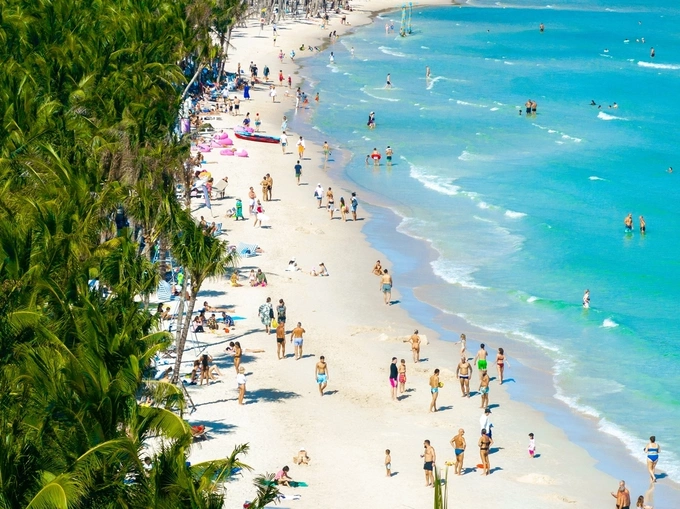 |
| Tourists on Kem beach in Phu Quoc. Photo by SG |
Average monthly rainfall on the island is approximately 30 mm, spread over 3.7 rainy days.
The company said demand for winter travel is expanding beyond traditional beach resort holidays, with travelers increasingly seeking itineraries that combine favorable weather with cultural experiences, gastronomy, nature exploration and outdoor activities.
The findings highlight Phu Quoc's favorable weather conditions during the Northern Hemisphere's winter rather than its overall popularity or the quality of its travel experiences.
Topping the list is Gambia's Banjul, followed by Liberia, in the Guanacaste region of Costa Rica.
Siem Reap in Cambodia came in third.
Other top spots included Mombasa in Kenya at No. 4, and Zanzibar in Tanzania at No. 5.
Cape Town ranked seventh, followed by Phuket in Thailand, Langkawi in Malaysia and Bridgetown in Barbados rounding out the top 10.
Phu Quoc recorded 9.24 million tourists in the first 10 months of this year, up 30% from a year earlier and exceeding its full-year target of 8.5 million.
Phu Quoc's peak tourist season runs from November to April, coinciding with the island's dry season, which typically brings sunny weather, calm seas and low humidity.

