 Get VnExpress first in Google Search
  See more of the news you trust. Make VnExpress a preferred source to prioritise our updates in your Google search results
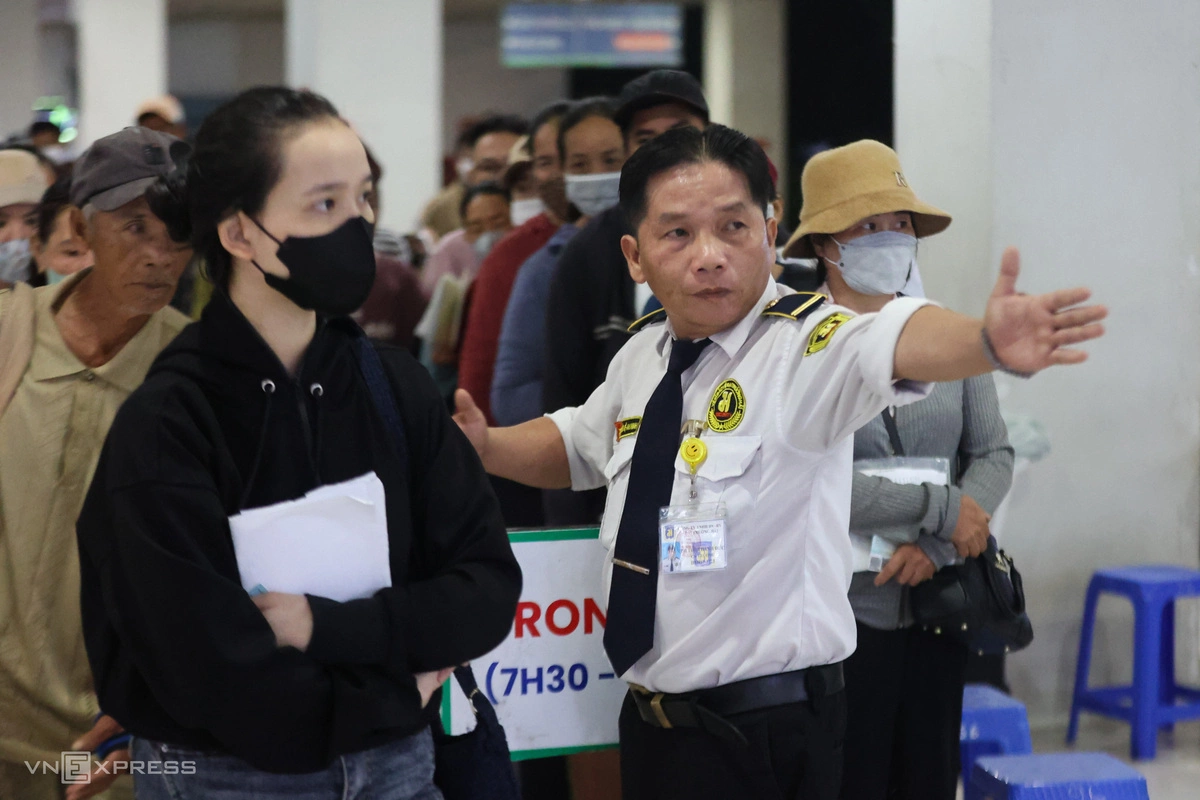
At around 5 a.m. on Oct. 6, the second branch of Ho Chi Minh City Oncology Hospital in Thu Duc is already packed, with long lines of people waiting to get queue tokens to see the doctor.
The hospital has chairs, but there were not enough for all the visitors.
The facility receives 4,800 to 5,000 people every day, including about 700 for radiotherapy, with most coming from provinces and cities across the country.
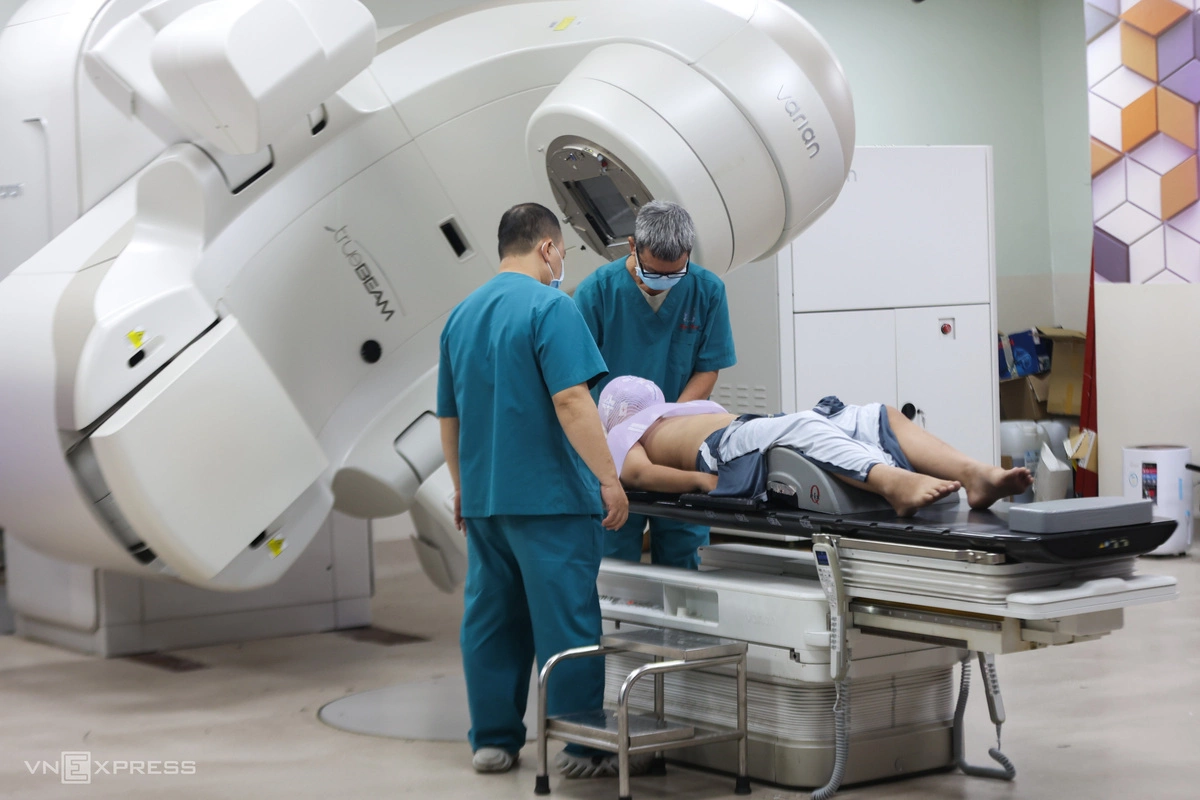
The hospital has 10 radiotherapy machines working in three shifts, from 5 a.m. to 11 p.m. every day.
For the machines to deliver their first radiation treatment at 5 a.m., technical staff must arrive between 3 and 4 a.m. to perform checks, measurements, and quality assurance procedures.


The radiotherapy department opens at 5 a.m., but half an hour earlier their seating areas and corridors are already crowded with patients waiting for treatment.
According to Dr. Diep Bao Tuan, director of the Ho Chi Minh City Oncology Hospital, the 10 radiotherapy machines are running at full capacity and treating about 700 patients a day, but another 800-1,000 people remain on the waiting list.
Patients wait an average of four to six weeks for their turn.

Each patient waits for about an hour for their radiotherapy session. Many, exhausted, sleep on benches along the corridors.
To cut the time needed to change equipment and accessories between sessions, the hospital often schedules patients with similar conditions consecutively. These are among the measures being used while the hospital waits for additional capacity.

Bong, a 63-year-old woman from An Giang, came to Ho Chi Minh City for treatment for endometrial cancer. After surgery in June, she waited for a month and a half before beginning radiotherapy.
She chose the first session of the day at 5 a.m. so that she could finish early and return to her rented room to rest. She is now on her 21st out of 28 sessions.
For the treatment, she has paid an advance of VND10 million (US$385) after the amount covered by health insurance was deducted.
A 59-year-old man from Gia Lai in the Central Highlands sat waiting in a corner of the department corridor from early morning. He had surgery for a meningioma a year earlier but did not undergo the recommended radiotherapy because he believed the tumor was benign.
When the disease recurred, he had to undergo a second operation followed by radiotherapy.
After surgery, he waited for more than two months to begin radiotherapy.
"At first, the doctor said I would have to wait six weeks, but it ended up being eight," he said. "I was worried because the disease had already come back once, but with so many patients, there was nothing else I could do."


Radiotherapy is not the only service under pressure; Other areas are also crowded from before dawn.
The overload is expected to ease somewhat since Ho Chi Minh City recently approved more than VND5 trillion (US$192.5 million) to expand the hospital in 2026-2030.
The expansion will include a new high-tech disease screening center, purchases of specialized medical equipment including a cyclotron system and single-energy linear accelerator, a new proton therapy center, and a new support facility for patients.
The city is also developing a multi-tier healthcare network, including the Oncology Hospital's Ba Ria and Binh Duong campuses and medical clusters in Tan Kien and Thu Duc, in an effort to expand cancer treatment capacity and reduce pressure on existing facilities.


