 Get VnExpress first in Google Search
  See more of the news you trust. Make VnExpress a preferred source to prioritise our updates in your Google search results
 Born in 1986 in Ladakh, India, His Eminence Kyabje Drukpa Thuksey Rinpoche was recognized at the age of two and a half as a reincarnated master of Vajrayana Buddhism. He currently oversees Druk Sang-Ngag Choling Monastery in Darjeeling, India, which is home to about 500 monks, and serves as principal of Druk White Lotus School, which has 1,000 students.
During the Vu Lan season, a major Buddhist festival of filial piety and gratitude, he returned to the Tay Thien Grand Mandala Stupa to preside over the Immeasurable Life and Wisdom Dharma Assembly.
In an interview with VnExpress, he discussed the effects of technology and artificial intelligence on young people, the limits of superficial "healing" trends, the importance of experiencing adversity, and how people can develop greater mental resilience in the digital age.
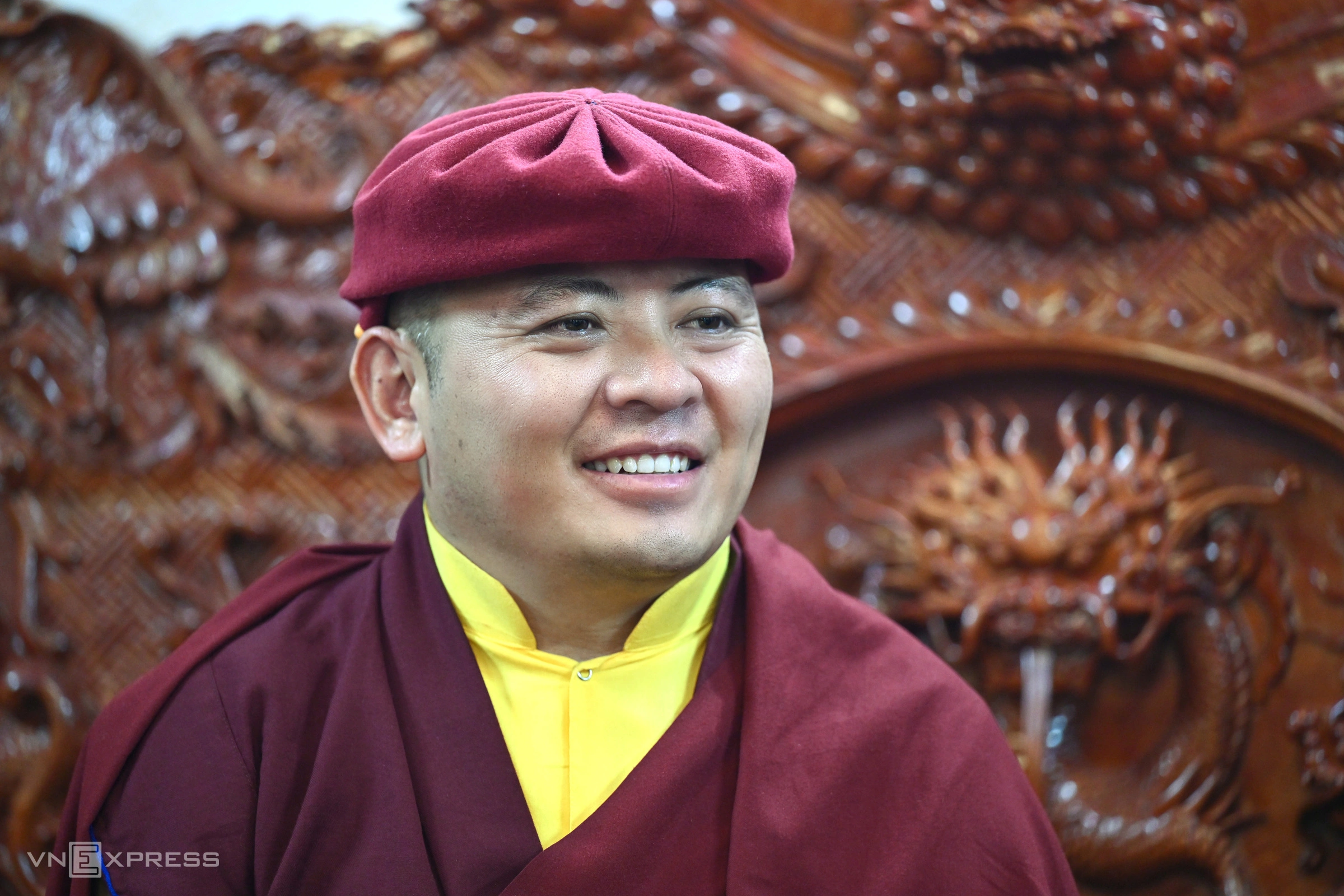
His Eminence the 2nd Drukpa Thuksey Rinpoche, a direct disciple and one of the most important spiritual successors of His Holiness the Gyalwang Drukpa. Photo by Giang Huy
You have returned to Vietnam during the Vu Lan season and a period commemorating several major historical events. What does this visit mean to you, and how do you perceive the changes in the country and its people after 19 years of connection with Vietnam?
The Drukpa Lineage and I share an auspicious karmic connection with Vietnam. Every time I visit, this bond grows stronger, allowing us to understand one another better and share more wisdom and teachings.
This visit holds profound meaning. Historical commemorations are not merely opportunities to express gratitude to previous generations. At their core, they also offer a lesson for young people: We should not take peace for granted, because today's comfort was made possible by countless sacrifices. Understanding this helps us appreciate the present and recognize our responsibility toward the future.
When I look back on my first visit to Vietnam 19 years ago, I think of impermanence, one of the core teachings of Buddhism. My old friends and fellow practitioners across Vietnam have grown older during that time. Everything is constantly changing, experiencing ups and downs and evolving. We must accept this as a natural law.
Vietnam is developing rapidly. Every time I return, I see more modern roads and beautiful landscapes. While improvements in the physical environment are encouraging, it is equally important to improve people's inner lives.
The 21st century has brought turmoil, loss and mental health challenges. In Vietnam, too, many people are caught up in a whirlwind of complexities. Food nourishes the physical body, while vitamins help maintain our immune system. The same principle applies to our spiritual lives. Amid joy, sorrow, attachment, anger and desire, spirituality can act like a vitamin for the mind, helping us maintain balance.
I have noticed a significant shift in people's thinking. When I first came to Vietnam, many people primarily turned to Buddhism to pray for health, longevity and wealth. Today, more people are seeking deeper understanding through spiritual practice and trying to experience stillness within the mind. I see this as an encouraging sign.
Having interacted with many young people, how do you think technology and social media are changing them?
I believe young people play a fundamental role in society. We need to trust, respect and listen to them while also providing appropriate guidance because they are the future of the country.
Young people everywhere live with the constant presence of technology. At the school I oversee, which has 1,000 students, I see many students becoming absorbed in screens and easily becoming anxious or irritable. Technology is inevitable as the world develops, but helping young people avoid losing themselves is a responsibility shared by families and the education system.
I always try to draw my students beyond the confines of textbooks and electronic devices. These platforms often teach people how to achieve individual success, but they rarely teach compassion. They ask, "How can I rise?" rather than, "How can we all rise together?"
Real life does not operate through clicks. A screen is an inanimate object: It has no emotions, smells, tastes or physical contact. When everything can be obtained so easily at the push of a button, without having to experience hardship, people can lose their ability to appreciate things.
Being skilled at operating a computer does not necessarily mean understanding the meaning of life. Human beings have remarkable intellectual capacity, yet we increasingly neglect some of our innate abilities because we depend so heavily on our phones. In that sense, we risk becoming less capable of thinking and adapting for ourselves.
My father is nearly 80. In the past, when there were no maps or clocks, he could look at the stars to tell the time, listen to birds to predict rain or sunshine, and, when he was ill, go into the garden to find medicinal herbs. By contrast, many of my friends in cities admit that if their phones run out of power and they lose GPS, they would not know how to get home.
Our ancestors walked for miles, navigating by the moon, stars, hills and mountains without losing their way. At that time, people relied heavily on their own intelligence and awareness. Today, however, many people have the illusion that they are becoming more intelligent because they spend so much time looking at screens, when in reality they may be allowing some of their abilities to become dormant. It is time to awaken and step out of the virtual world.
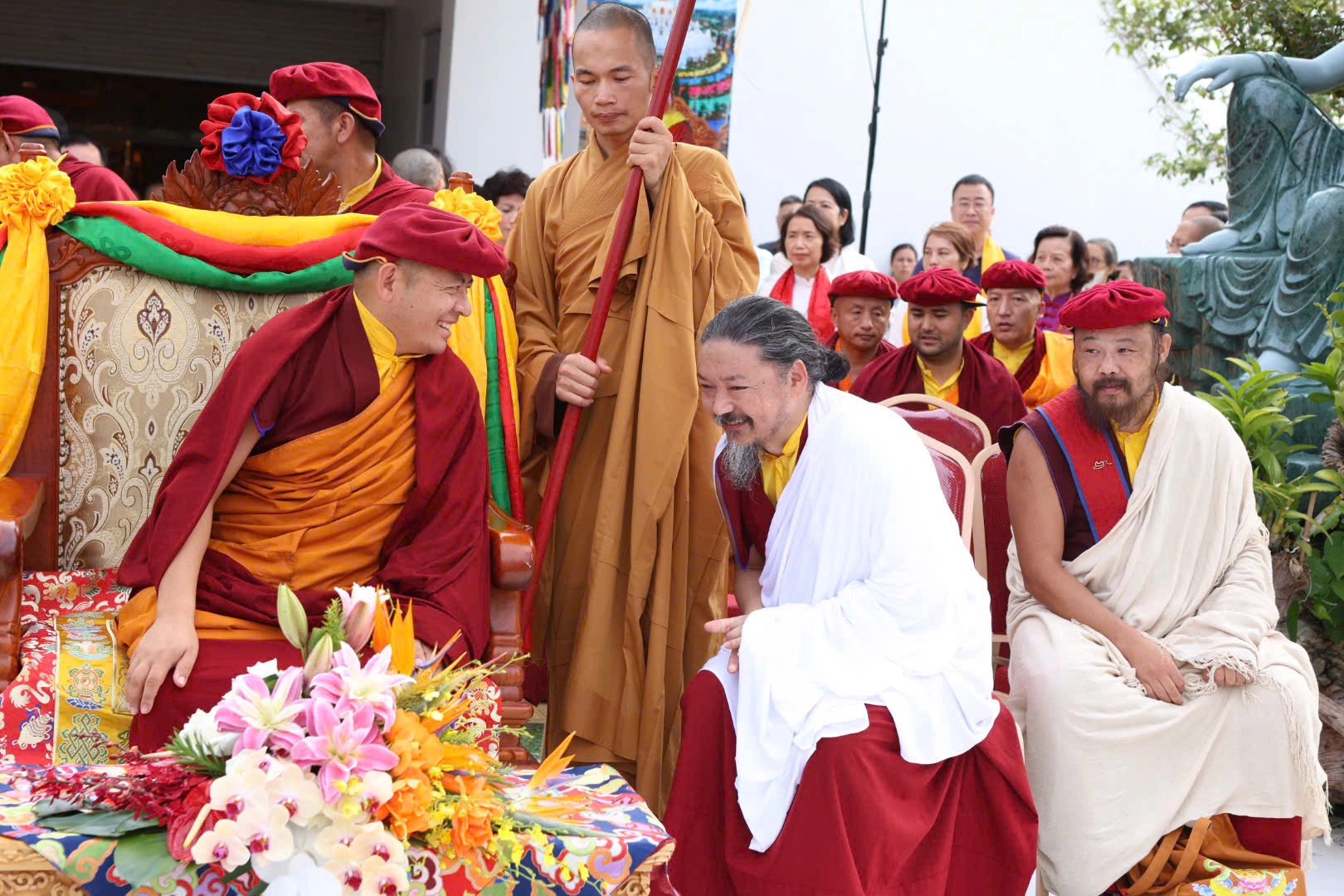
The rapid development of artificial intelligence (AI) seems to make people even more likely to rely on machines for answers. How can we avoid losing our sense of self-worth in this era?
New technologies and AI bring many benefits. They can accelerate development and even save lives. I do not deny that. However, excessive dependence on them can make the human mind increasingly passive.
Machines operate within programmed parameters and may fail when they encounter situations beyond those parameters. Human intelligence and our ability to adapt, by contrast, are not subject to the same fixed limits. Sometimes, we end up restricting our own capabilities to fit the limitations of a machine.
It is important to remember that everything from a phone screen to the most sophisticated AI system originates from the human mind. These technologies did not emerge from nothing. Since humans created them, we should not assume that we are less intelligent than machines. We are capable of going beyond them.
Some young people today face serious mental health challenges and turn to "healing" courses. Some argue that these are simply ways of escaping reality. What do you think?
One underlying factor is that some young people grow up in overly sheltered environments. Parents may protect their children and take care of everything for them, leaving them with little exposure to hardship. When they suddenly encounter adversity, they can become overwhelmed because they lack what I would call mental "immunity." They may then try to escape through substances or superficial forms of "healing." These can provide temporary relief, but once that relief fades, they may find themselves facing the same problems again.
Life is like a long journey on foot. If a child is warned about difficult terrain ahead, they can prepare the necessary equipment. But if parents tell the child it is simply a "leisure walk in the park," the child may set out unprepared and struggle along the way. Parents should help children learn to face challenges from an early age.
Another source of suffering is excessive self-centeredness. When people are raised to focus entirely on "me," they can easily fall apart when things do not go their way. Opening one's heart, developing empathy and sharing in the suffering of others can be practical ways to reduce one's own burdens.
Finally, academic qualifications and scholastic achievement cannot guarantee happiness. A high level of education is meaningless without compassion. Education in the digital era should not merely fill people's minds with knowledge. At its core, it should also cultivate character and empathy.
Having devoted so much effort to young people, have there been times when you felt powerless in the face of their struggles? Or, conversely, have you had to learn from your own students?
Yes, I have felt helpless. In my homeland of Ladakh in the Himalayas, I devote considerable effort to young people, yet I have witnessed some fall into drug abuse. Despite my efforts, I could not bring them back because they had gone too far down the wrong path. That brings me deep sadness. I want to help as many young people as possible because they are the future, but sometimes I feel helpless.
At the same time, those experiences, together with managing a school of 1,000 students, have shown me that education must be a two-way process. I have learned a great deal from young people. They help me understand how the modern world, technology and the economy work. Even when my advice is not effective, they can show me where I was mistaken. We must learn to listen rather than simply lecture.
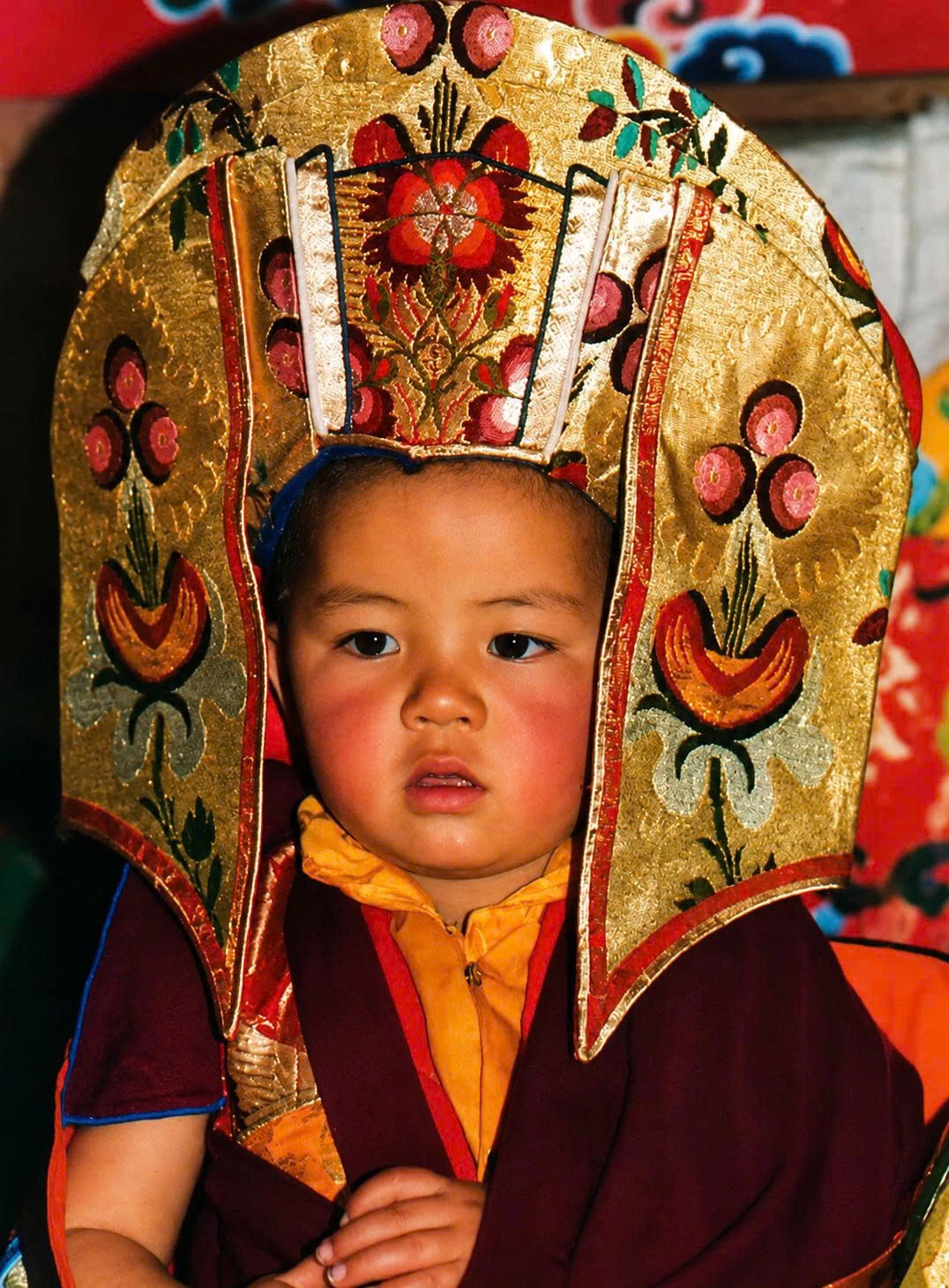
His Eminence Thuksey Rinpoche at a young age. Photo courtesy of Drukpa Vietnam
Your childhood was shaped by strict Buddhist education and training. What did giving up those years of freedom and play teach you about happiness?
I spent nine years undertaking advanced studies at Tango Monastery in Bhutan. It was a wonderful experience and was not particularly difficult because I was already older by then. The truly difficult period was my basic Buddhist education, which lasted from the age of four to 18.
At that age, I was a young boy with the same desire as other children to run, shout and play. But whenever I asked for permission, the answer was always "No." I was not allowed to play football or gather with friends. Many times, I would watch through the window as my peers played outside for hours, then turn back to my studies and strict discipline. At the time, I felt I was making a great sacrifice by giving up my childhood.
Looking back today at the lives of those boys who played outside my window, I see a different picture. Many of them are not happy. They struggle with depression, anger and psychological difficulties. By contrast, I feel genuinely happy and content with who I am and the life I lead.
I have no regrets. Instead, I see those years of discipline and the sacrifices of childhood pleasures as a blessing. Through the guidance and distinctive educational approach of my teacher, His Holiness the Gyalwang Drukpa, I became the person I am today.
It is easy to find wealthy, powerful and highly educated people in this world, but it is much rarer to find people who are genuinely happy. Finding happiness within oneself is the greatest fruit that discipline and sacrifice have brought me.
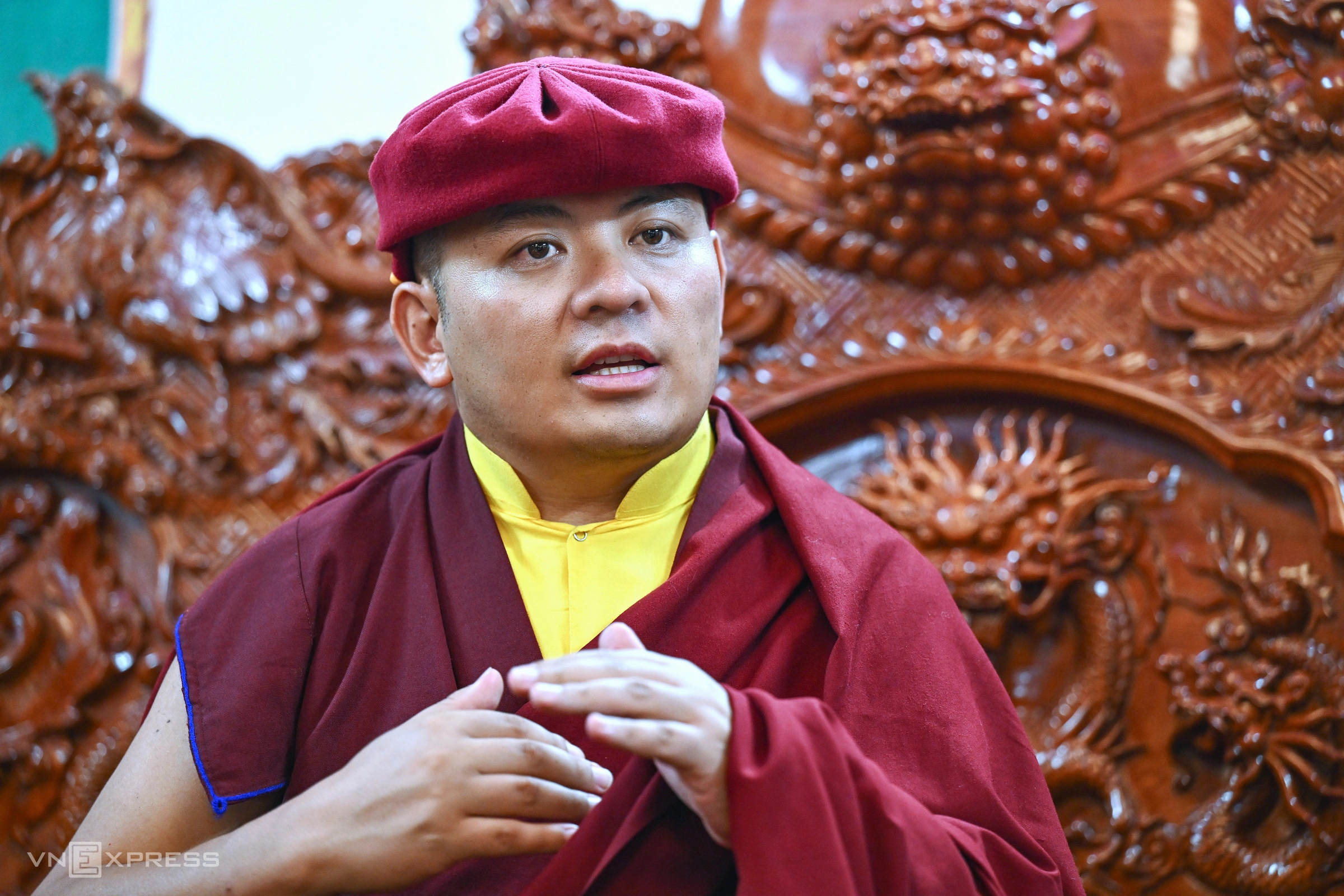
The 2nd Kyabje Drukpa Thuksey Rinpoche at the Tay Thien Grand Mandala Stupa on Aug. 18, 2026. Photo by Giang Huy
You often advise young people to face adversity. Through your five-day eco-walk across the Himalayas, which promoted environmental protection, anti-drug awareness and youth development, what did you learn from the experience?
When traveling by plane or car, we move from one point to another without necessarily learning much along the way. But when walking hundreds of kilometers and witnessing people struggling with hardship, we connect more deeply with life and realize how fortunate we are.
The Buddha could not have attained enlightenment had he remained inside a silk-adorned palace. One of his first great lessons came when he stepped outside and witnessed human suffering. Our walking pilgrimage served a similar purpose.
As a child, I was accustomed to soft beds and could not sleep if a mattress was too firm. During the Pad Yatra, or spiritual walking pilgrimage, I had no choice. I spread a cloth and slept on the cold ground. When I returned home, simply lying down on my own mattress gave me an overwhelming sense of gratitude. If someone simply tells us every day to appreciate life, we may understand the words intellectually. Through hardship and direct experience, however, gratitude becomes deeply rooted.
Because of this, my life today feels very light and simple. I can eat anything and sleep anywhere. Experiencing luxury or extreme poverty no longer determines my state of mind.
Looking at the world today, I see many people suffering. Some wealthy and powerful people experience depression or even take their own lives because their status has declined relative to others. I believe part of the problem is that they do not know how to maintain balance amid life's fluctuations.
Many people mistakenly believe enlightenment means possessing magical powers or extraordinary abilities. It does not. Enlightenment is about knowing how to keep the mind balanced and free from greed, anger and delusion. When praise does not make you arrogant, criticism does not overwhelm you, and you can calmly face whatever circumstances arise, you are moving toward that state of inner freedom.
Phan Duong

