 Get VnExpress first in Google Search
  See more of the news you trust. Make VnExpress a preferred source to prioritise our updates in your Google search results
 They believed that keeping the children with relatives was the best way to heal the pain caused by the loss.
"I want to do something!" Binh told his sister Truong Thi Thanh Thanh over the phone one morning in September 2021, after learning that thousands of children had been orphaned by the pandemic.
"We could set up a school," he suggested.
"My first thought was skepticism," Thanh recalls. "It was overwhelming pain. Now, gathering a thousand such pains in one place. I was afraid it would spread."
As FPT's CSR director, Thanh, 74, who has devoted two-thirds of her life to voluntary work and social causes, feared this might not be the best way to help the children.
When the idea of building a school to raise and educate 1,000 Covid orphans was discussed, some said "this problem is too hard for FPT to handle" and suggested providing material assistance instead.
Although FPT already had an education ecosystem from primary school to university, raising orphans until age 18 was a social welfare project, something in which FPT had no prior experience.
But Binh's childhood memories of growing up in a wartime boarding school gave him a different perspective.
He believed that learning and training alongside peers who shared the same circumstances would help the children bond, comfort one another, and turn pain into strength.
He told the FPT Group leadership: "If we only donate money, the kids get a few decent meals. It is better to open a school that gives them food, clothing, care, and the chance to learn and grow."
On Sept. 16, 2021, after just 24 hours of internal discussions, Binh announced that FPT would build a school in Da Nang to raise and educate 1,000 Covid orphans.
The company committed to a 20-year program costing VND80 billion (US$3.07 million) a year modeled on a military-style boarding school.
According to Thanh, such rapid decision-making was "highly unusual" at FPT.
The announcement immediately drew public attention and sparked debate over the model for caring for orphans.
In newspapers and online forums, many experts opposed concentrating Covid orphans in a single separate school.
A UNICEF representative noted that developed countries had largely abandoned institutional care, citing risks of delayed brain development, low self-esteem, weak social skills, and difficulty integrating into society.
The then Minister of Labor, Invalids and Social Affairs said in the National Assembly: "We do not encourage enterprises to set up facilities to raise and educate Covid orphans."
But despite the avalanche of opposition, the project went ahead. Its founders "took a chance" in the belief that they could help these orphaned children have a better future even without their parents.
"At that time, it was still unclear what the project would entail; we just felt it was the right thing to do, so we went ahead," Thanh says.
The first task was to recruit a director for the boarding school.
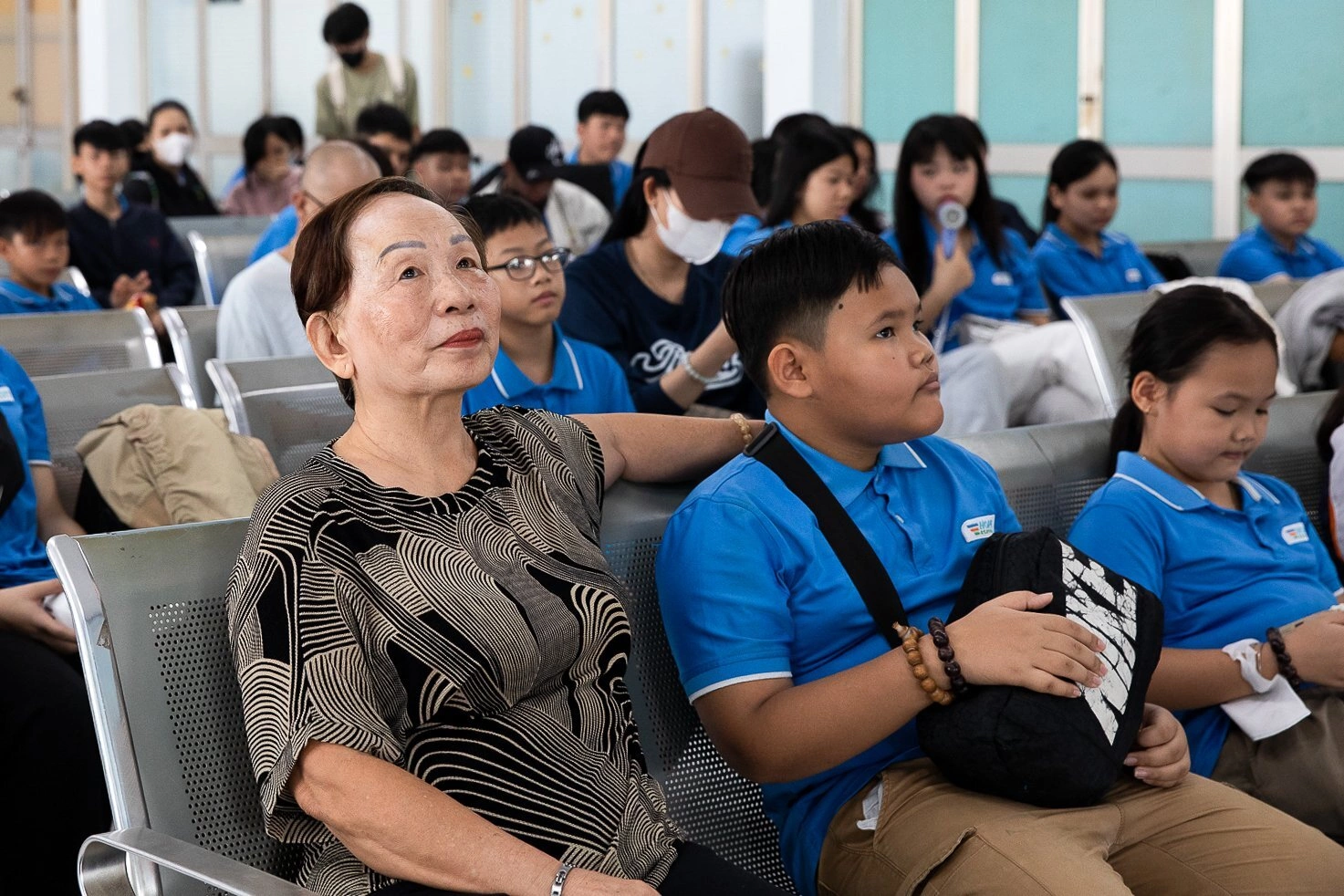
When he applied for the director's post, Hoang Quoc Quyen, 44, had held senior management positions at major corporations including Viettel, VinFast, and Tiki, but had never worked in education.
His biggest possible advantages as an educationist were a psychology degree, years of military service, and being the father of three children.
"It was a strange recruitment process," he recalls.
In nearly 20 years in business he had never applied for a job and did not even keep have a CV.
This time he had to go through seven rounds of interviews within a month. "By the fifth round I was ready to quit - it felt overly complicated, meeting one person after another."
Curiosity about the project kept him going until the eighth interview, this time by Binh and FPT's other top leaders.
"If one day a girl student at the school announces she is pregnant, how would you handle it?" Binh asked him.
"That question touched me," Quyen says. "It revealed the heart of a father who had already thought through the hardest things these children might face while growing up."
He realized the founder was serious about the project, not acting on a passing impulse.
Meanwhile, doubts about the school had not ended. In fact, the very families the project aimed to serve -- the relatives of Covid orphans – began to be skeptical.


When a group of visitors in blue uniforms arrived and offered to take two children from Dong Thap Province in the Mekong Delta to Da Nang for free schooling, board, and lodging until age 18, plus support through university, Thanh Trong's entire family thought it was a scam.
It was a summer afternoon in 2022.
Trong, then 15, was playing football with friends on a vacant lot near his house when he heard his grandfather calling him.
He ran home thinking guests had come again.
Nearly a year after his mother died of Covid-19, strangers kept visiting often, leaving gifts, and rarely returning.
Sitting across from his grandparents were two visitors accompanied by a provincial Youth Union officer.
Speaking in a thick central accent, they inquired warmly about Trong's studies and introduced a new school that had opened the previous year solely to raise and educate Covid orphans in Da Nang.
The family would not have to pay a single dong.
"It sounded like a scam," Trong says. At the time, the Mekong Delta was awash with stories of human trafficking to Cambodia for work in casinos.
No one in the family believed the offer, and Trong's grandparents remained deeply hesitant. They consulted relatives from Ho Chi Minh City and Quang Nam near Da Nang.
Everyone replied the deal was real, backed by a major corporation, and widely reported in the media. "Let Trong go. It will give him a future."
But no family in Dong Thap had yet sent a child to this unusual school more than 1,000 kilometers away. The grandparents dared not take the risk.
Trong’s family was not alone in suspecting the enrollment invitation.


When he accepted the role of opening HOPE School in 2021, Quyen never expected to face so much skepticism.
At the outset he saw it as a project with a clear humanitarian mission, a well-defined group of beneficiaries - 4,400 Covid orphans across the country - and strong backing from a major corporation.
Years of experience in business had given him confidence about management and working with people.
But to run a school, he first needed students.
He decided to go from door to door to introduce the school instead of waiting for applicants.
When social-distancing restrictions eased in November 2021, he flew from Da Nang to Ho Chi Minh City. His only luggage was a newspaper clipping about FPT opening a school for Covid orphans.
Armed with a list of orphaned children, he traveled from province to province, knocking on doors and trying to persuade families to send their children to Da Nang.
For the first several months he only saw suspicious looks.
"Scam," "There's no such good deal," "If you know we're struggling, just give us money instead"... Quyen heard rejections every day at every house he visited.
He understood when he looked up at the family altars and saw the plaques listing donations from organizations and individuals for children who had lost a parent.
He says: "Only then did I realize I was doing something completely different - testing society's trust in kindness - with nothing to prove it except a newspaper article. Who would believe it?
"I felt I was taking a huge risk myself."
After nearly a month of solid rejection in Ho Chi Minh City, he began to waver.
He hailed a taxi to go to the airport, ready to return to Da Nang and report to Binh that it was an impossible mission.
"I had visited hundreds of homes and thought this is finished - they simply don't believe us," he recalls.
"No students means no school."
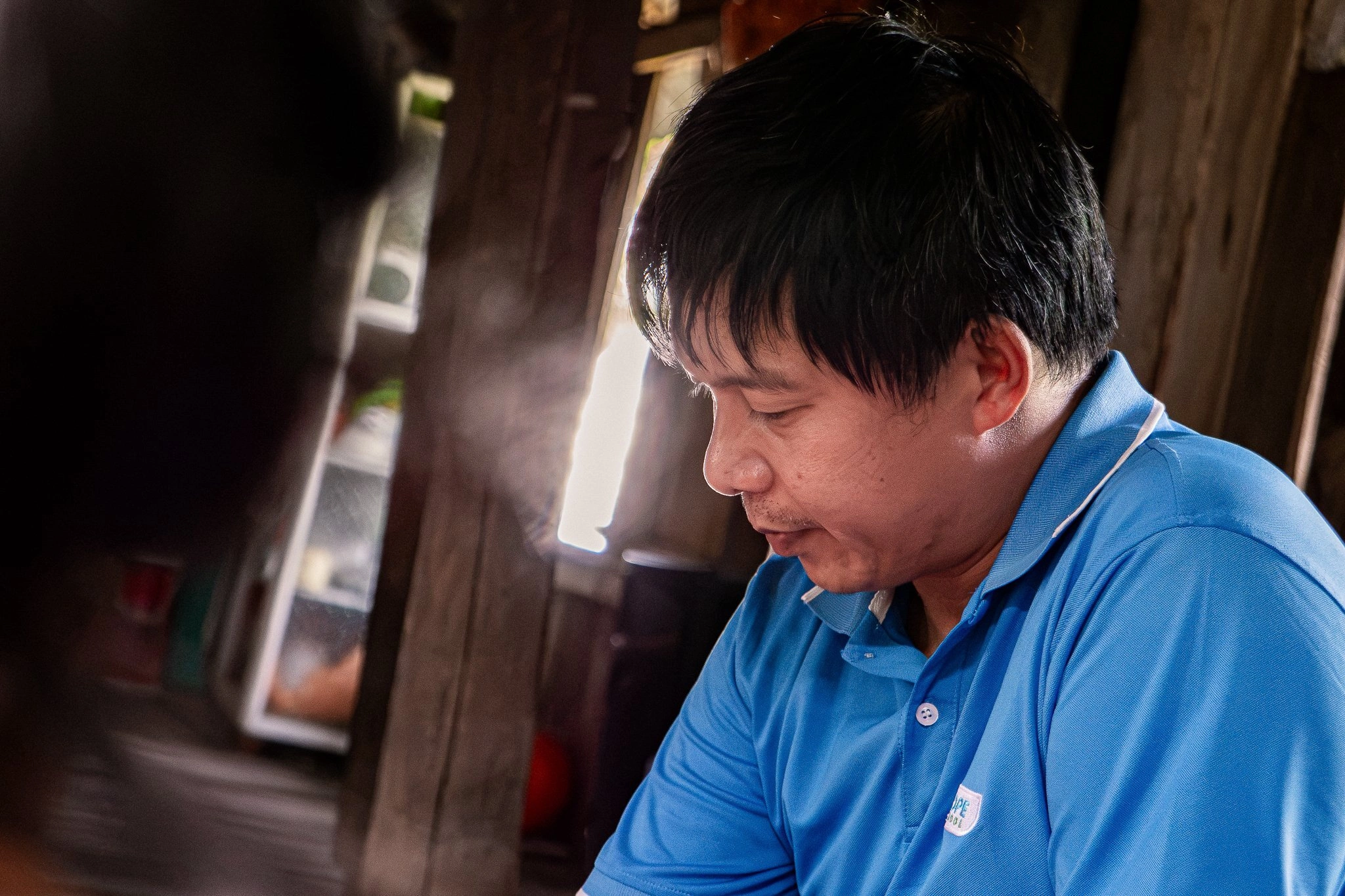
Just then his phone rang, and a young girl was asking about the school.
He told the taxi that was taking him to the airport to change direction and go to a house on Doan Van Bo Street (formerly District 4).
After he spoke with the girl, she agreed to enroll.
Thuy Anh became "student 001."
"She was a good omen for this project," Quyen says.
After that first yes, more families began to agree in the days that followed.
On Feb. 6, 2022, HOPE School welcomed its first 34 students from nine provinces and cities to study and live at a temporary campus borrowed from F-City in Da Nang.
Once the initial hurdles were cleared, Quyen and his team faced the next challenge: healing the psychological wounds Covid had left on the children.
Summer 2021 should have been the best ever for siblings Thanh Trong and Thanh Truc. Their mother took them to Binh Duong, where she worked, the moment the school break began. Since their father died, the two children had always been longing for her presence.
Her rented room was small but warm, enough for a bed shared by their mother and Truc, while Trong slept in the loft.
After months apart, Truc longed to hug her mother's soft figure and chatter about everything every day.
Near the end of August, the boarding house was hit by the Covid outbreak. Their mother and Truc tested positive and were sent into isolation. Trong stayed behind alone. Because of a pre-existing heart condition, their mother grew critically ill within a week and was hospitalized. The three of them were separated.
A week later neighbors told Trong his mother had died. He refused to believe it. Two hours later people brought her back, only an urn of ashes.
Trong could not cry.
He says: "My world almost collapsed. I had already lost my father. My mother was the only source of strength left and then she was gone too."
Four hours later Truc returned from quarantine. Seeing the urn, she burst into tears: "What's this, brother? You lied to me, you said Mom was at home waiting for me..."
From that day, the two children were orphans, both father and mother gone.
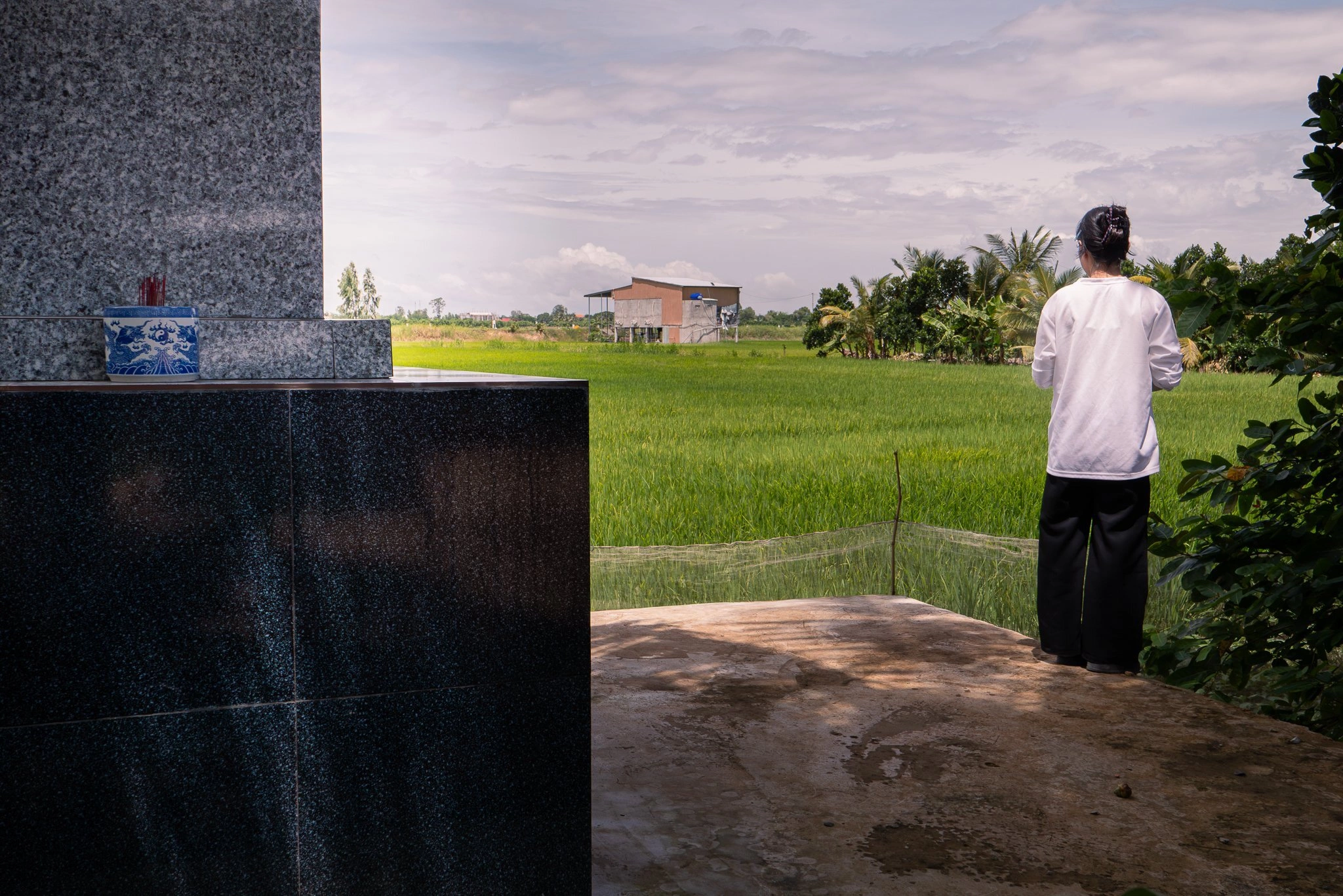
The siblings remained stranded far from home for another month. Then Truc fell ill. Trong cared for her while living in constant fear.
He says: "One is born, ages, gets ill and dies – I was not afraid of that cycle. I was afraid of losing the people I love. I had already lost both parents. I didn't want to lose anyone else."
After his mother's death and long isolation, he grew quieter. His mind felt empty. He avoided conversation, heard nothing people said, and felt a wall between himself and everyone else.
Only later, with medical knowledge, did he recognize the signs of mild depression. The condition lasted a full year after his mother's death until the day two men in blue uniforms visited and took him to a different place.
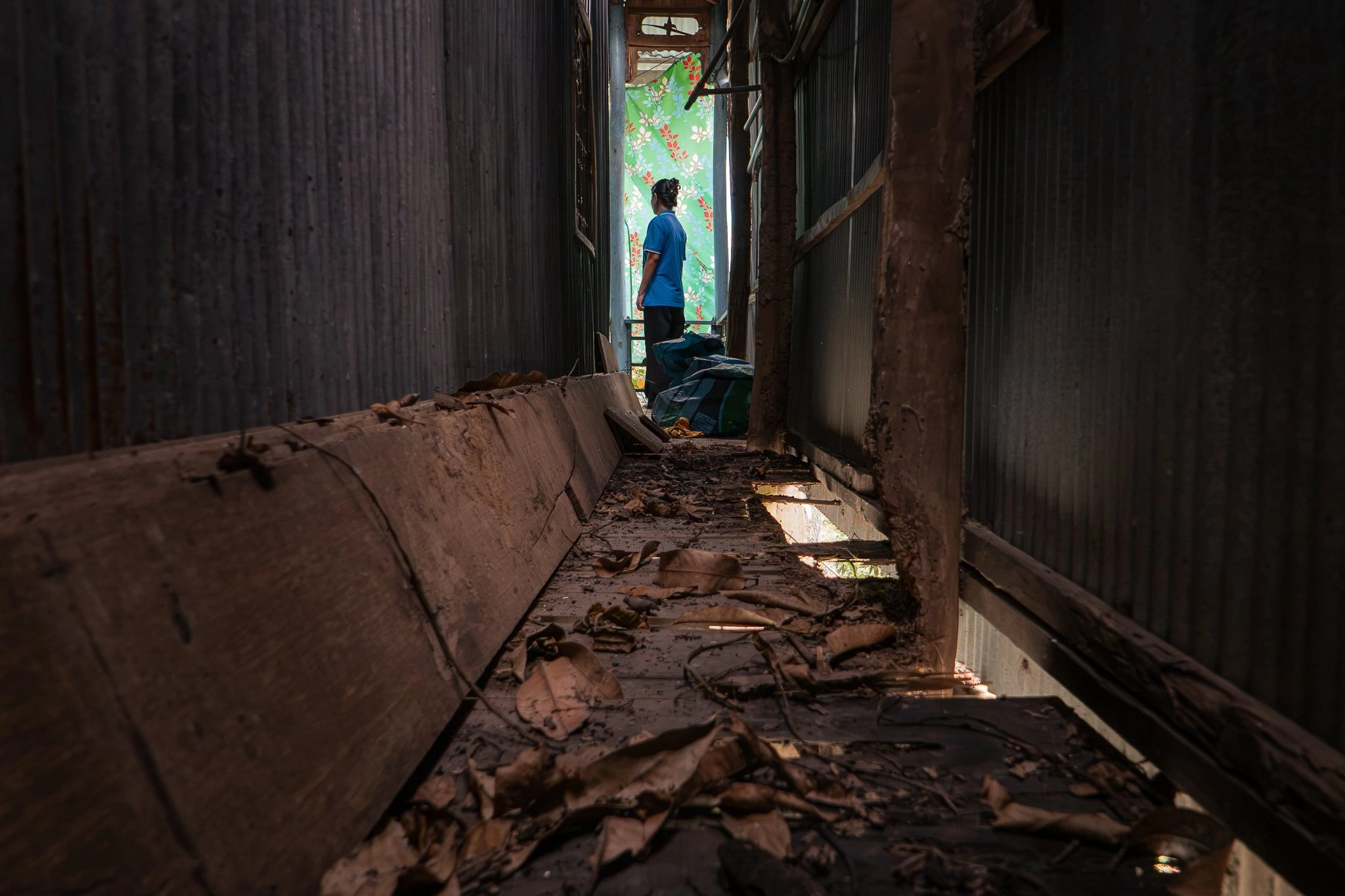
His grandfather asked: "What do you think? Can you go?"
His grandparents had spent sleepless nights weighing the choice between sending the children away and keeping them.
The two had still not recovered emotionally, and now they would live more than a thousand kilometers from home.
The grandparents could not bear the thought, but staying offered no future. Their only income came from the old man's fishing nets, sometimes enough, sometimes nothing, and no one knew how long it would last.
"I've decided to go," Trong replied. He himself then persuaded his grandparents.
"Living in the countryside may not give us a future. I want to try studying in Da Nang. If it doesn't work, I'll come back."
Trong had always loved learning. He had planned to join an education university to become a teacher or join the army. Both sectors are subsidized by the government and he will not have to pay tuition cost.
But after his parents died he decided to abandon all plans.
By choosing the "strange school," the ninth-grader was betting on his future again, hoping it would open up more choices later.
If it worked out, he would take his younger sister Truc, then in fifth grade, to join him, he decided.
For the first two months at HOPE, Trong kept to himself, spoke to no one, and only nodded when asked anything.
The Mekong Delta boy was unused to the food, climate, accent, and way of speaking in Da Nang.
The unfamiliarity made him withdrawn.
"There was always a room, an empty space inside my head," he recalls.


Most children who lost a parent were in the same mental state as Trong.
In 2022, HOPE School held its first psychological screening for nearly 300 students. Doctors and specialists found that 76% had mental health issues.
When the school received its first batch of students, Quyen and the teachers did not face any great problem, only the mundane issues of daily life, eating, sleeping, homesickness, missing a mother, missing a father.
One time a second-grader stopped eating.
When teachers asked him what he craved, he replied it was his grandmother’s fish-sauce fried rice. They cooked it for him, but he shook his head, saying: "It's not Grandma's smell."
Another child was playing happily and then suddenly burst into tears without explanation. A few days later he said: "Because the teacher who walked by looked so much like my mom."
Quyen says: "Many of the little ones felt lost in this world. They missed their homes terribly, but that home no longer had a mother or father. Their whole lives felt like in transit, they didn't know where they belonged."
Quyen was guided to build HOPE School on a military-cadet model, comprehensive education in culture, physical training, and military discipline.
Once he actually began raising the children, he realized a traditional boarding-school model was not enough; he wanted the school to become a place each child could call home.
But that goal proved far harder than he had first imagined.
As Viettel's general director in Peru he had led more than 1,600 employees, Vietnamese and local, and built a successful Vietnamese telecom brand in South America.
However, raising children was an entirely different kettle of fish. Adults follow rules for their own benefit; children only listen when they feel loved.
Quyen says: "With kids, patience is the mark of love. Each child needs companionship not just in words and actions but, above all, in time devotion."
Step by step he and the teachers designed and refined a "healing regimen" for HOPE students based on the philosophy of "back to basics" by teaching the children independence through the simplest routines.
"Get up and go, get up and go
Those who win have never known defeat
Those who grow wise have never stayed down
Get up and go, get up and go
Get up and go, my fellow countrymen..."
At 5:30 a.m., as the sun just breaks, the song "Get Up and Go" blares from the school loudspeakers. Children pour out of the corridors, line up neatly for morning exercise and then automatically pick up brooms, hoes, and watering cans to garden or clean.
Everyone has a task. The more than 6,500-square-meter campus is cared for entirely by the students themselves: one group wipes desks, another sweeps corridors, another clears the yard.
After regular classes they stay busy with clubs such as music, painting, soap-making, pickleball, badminton...
More than 40 clubs have been created over five years, covering every activity the teachers can invent, so that each child can "discover their own excellence."
Gradually these activities became HOPE's "house rules."
"They have no idle time. There is always something to do, friends to play with, new experiences to try," Quyen says.
The children are taught to serve themselves, look after one another, study, and mature. Older students support the younger ones.
After three years, things started to fall into place. Pairs of slippers would be lined up neatly outside every room. The school would fall completely silent the moment the bedtime gong sounded.


Almost every month the school invites visitors. Quyen has one rule: guests must tell a story, about a life lesson or a career hardship, to the students.
He explain: "The school never accepts money. Giving money is the easiest thing. Stories become the capital from which the children start building their own dreams."
He calls this method "driving the piles," referring to sinking deep, solid foundations so that the whole structure above can stand.
The lessons shared by guests gradually build the children's confidence and prepare them to be resilient adults.


After two months Trong gradually settled into the house rules, waking by himself, folding his blanket, exercising, gardening, cleaning, and joining clubs. Friends who shared the same loss and kept moving forward became his inspiration.
He says: "If I keep shrinking into myself I'll live in isolation. That won’t do. I have to open up, talk and connect more."
Trong was appointed squad leader, the "big brother" of the shared house, responsible for guiding the younger children into their routine.
He slowly became an energetic organizer, taking part in and coordinating many school activities.
"There is no single formula for a happy child, but love can be the medicine that heals every wound," Quyen concludes after five years of running the school.
In this year's screening of nearly 200 HOPE students, the rate of psychological problems had fallen to just 2%.
But not every child benefits. Some never adapt to the school and choose to return home. One student remained stuck in first grade and went back to the mountains, the place where he felt he truly belonged.
"The important thing is that a child should never feel alone, no matter where they are," Quyen says.
Psychological trauma is not the only problem orphans face. Financial issues sometimes quietly pull away the chance to live the life they choose.


In August 2026, as students returned after two months of summer break, 15-year-old Kpa H'Truong of Dak Lak decided not to board the train back to HOPE School.
She told her homeroom teacher: "My father can't get around. I have to stay and take care of him."
She was sad, but the sadness could not match her love for a father whose condition was worsening. For six months he had been suffering from severe spinal pain, struggling to move, and barely able to work.
The family once had five members. The eldest brother had died young and their mother passed away five years ago from Covid. H'Truong did not want to lose her father too.
Her second brother, Y Duong, had just finished 12th grade and left HOPE School after the graduation ceremony in June.
He returned to the village to learn tractor repair. His workshop is nearly two hours away by motorbike, and so can only visit their father during weekends.
Throughout the summer, H'Truong took whatever work she could find. First she cut sugarcane for hire, 200 bundles a day earned her VND400,000 ($15). By the third day the tedious physical labor made her ill. Once she recovered she switched to cutting grass.
Over the summer she managed to earn about VND2 million, just enough with careful use to cover food expenses for her and her father.
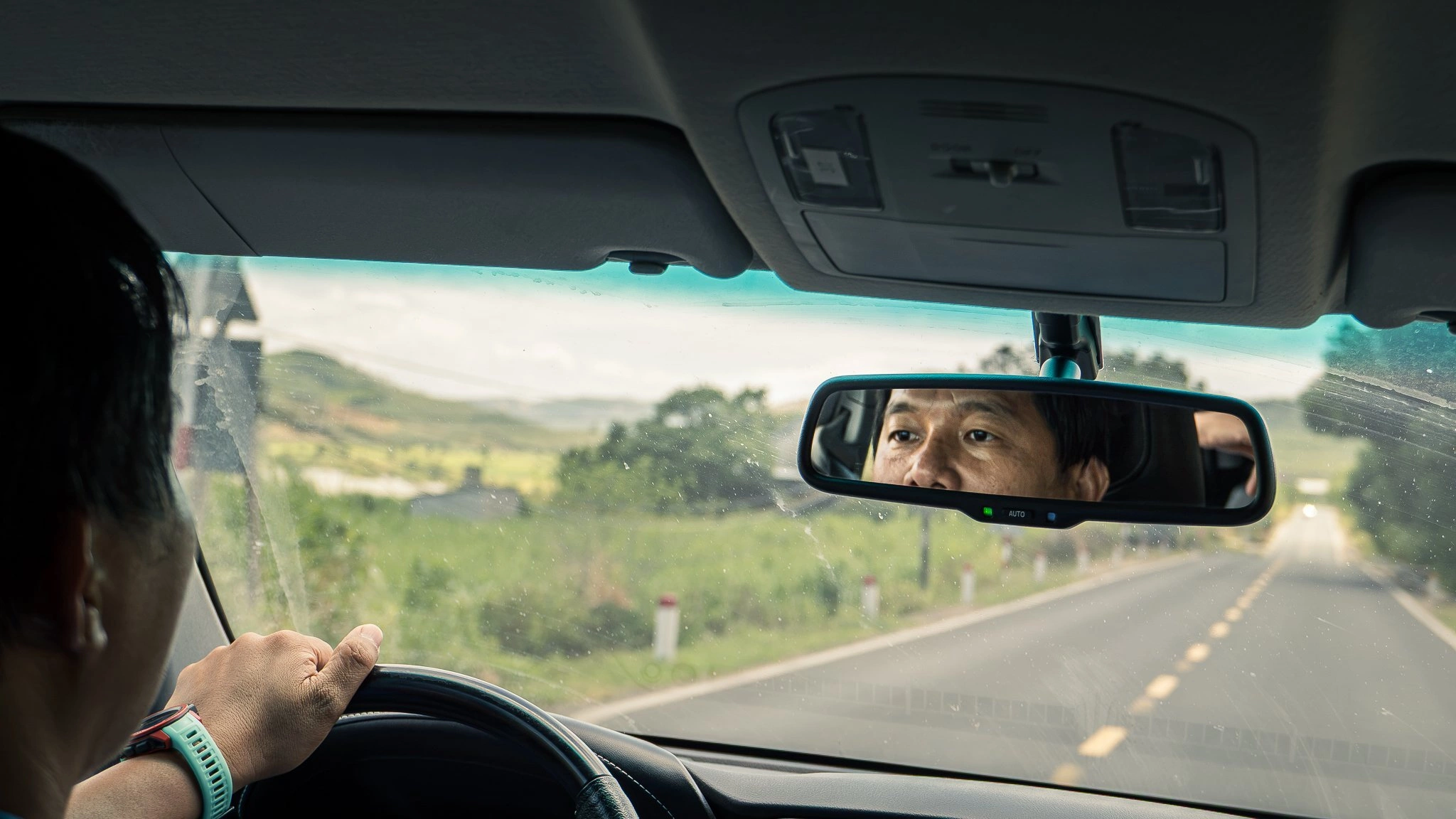
"What if H'Truong refuses to come back?" Quyen asked the two teachers during the long drive they made from Da Nang to Dak Lak to meet and hopefully persuade H'Truong to return to school.
During the entire 500-kilometer journey the main topic was how to coax her back.
Quyen told them: "Her fear is that no one will look after her father, and that there will be no money. It is a terrible, helpless kind of love."
If she dropped out and stayed home, H'Truong risked becoming like many other Ede girls who marry at 15.
The helplessness of poverty and lack of education would become a cycle that stretched from one generation to the next with no way out. Quyen wanted to "rescue" his student.
After five hours on the road, the HOPE trio and a local Women’s Union official arrived at H'Truong's house.
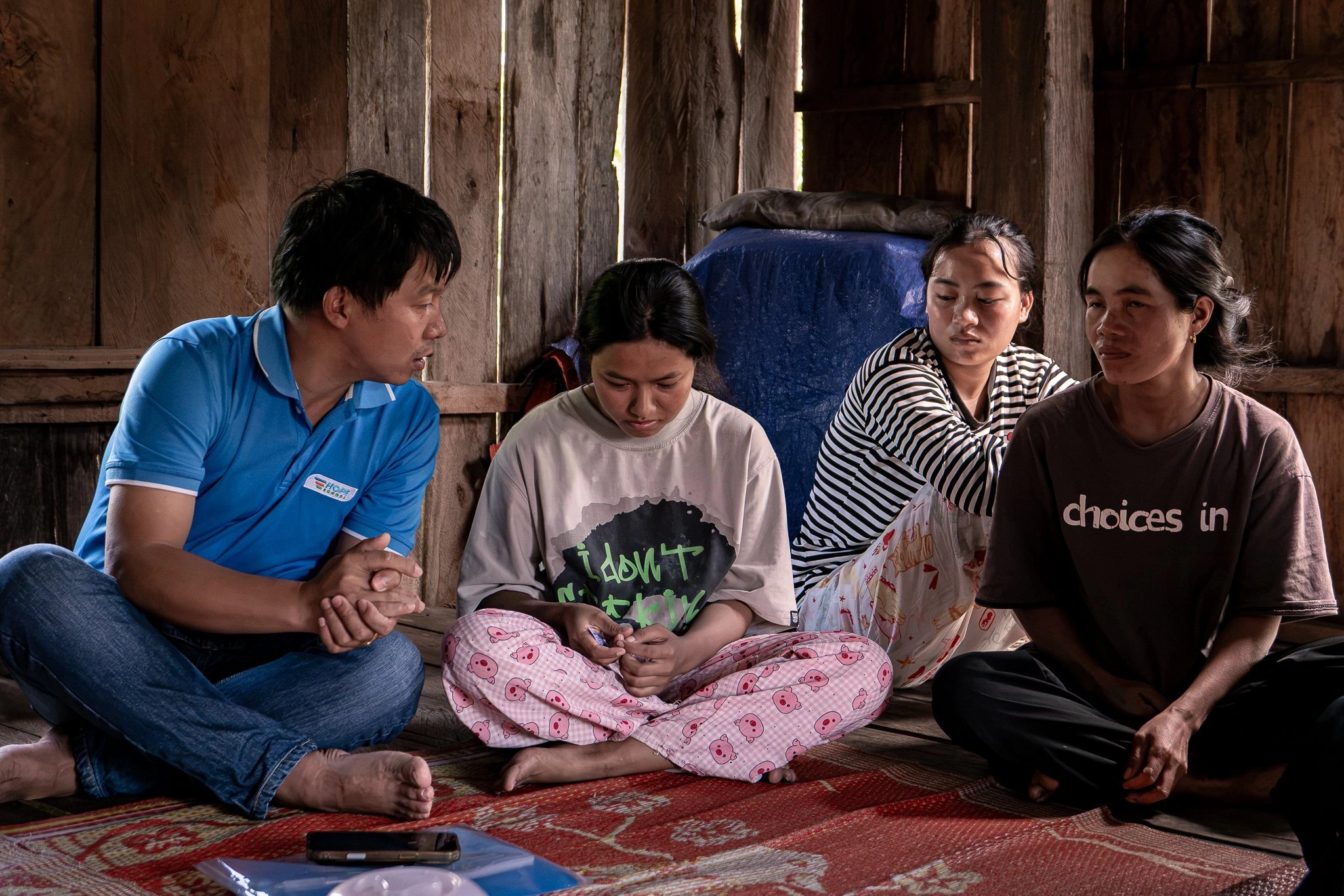
In the dilapidated wooden house that held only a single bed for her father, H'Truong greeted the teachers with shy anxiety.
After asking about her father's health and greeting her uncle and aunt, Quyen turned to her studies.
He said: "You're already in 11th grade. Just a little longer and you can go to college or university—far better than staying home to get married."
H'Truong looked at her uncle and aunt, and lowered her head. She said nothing, only cried.
Everyone gathered around, each offering an opinion. Some urged her to return to school; others advised her to stay with her father.
Caught in the maelstrom of conflicting advice, the young girl kept her head down, hands clenched, tears streaming, unable to speak.


After a while Quyen and a teacher took her outside for a walk.
"I wanted to separate her so she could think for herself," he explains.
Away from the house she gradually relaxed. The tears stopped, though her head stayed bowed as she walked quietly beside him and the teacher.
After giving her some time to let her calm down, Quyen bent halfway, looking into the eyes of his young student: "I will give Y Duong (her brother) a motorbike so he can come home more often. You can share the duty of caring for your father with your brother."
He added that the Women’s Union had promised to take her father to the hospital for check-ups and monitor his health regularly. Back at school the teachers would allow her to call home every other day instead of only once a week.
"Come back to school with me," he said.
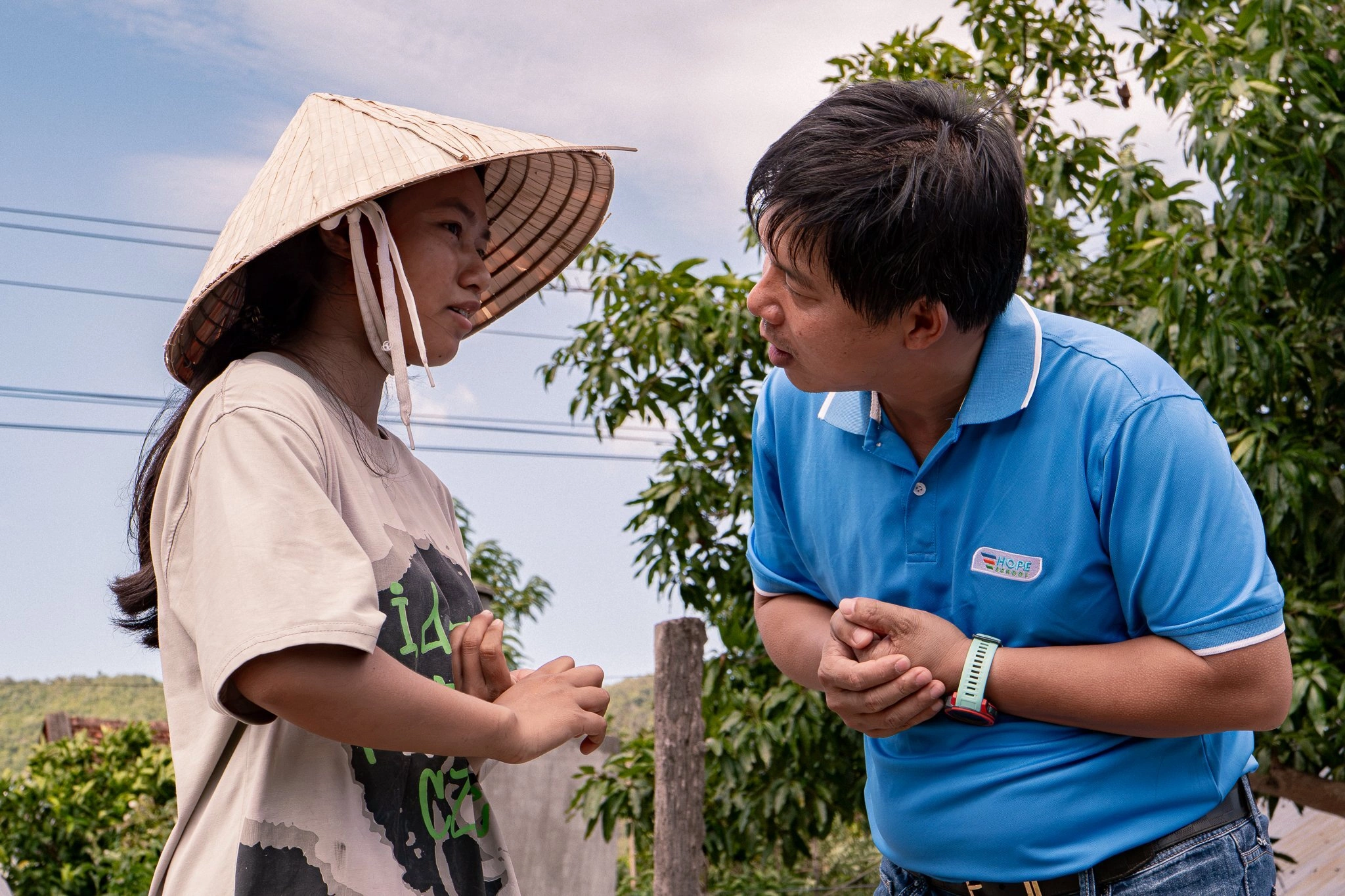
At last, the girl nodded.
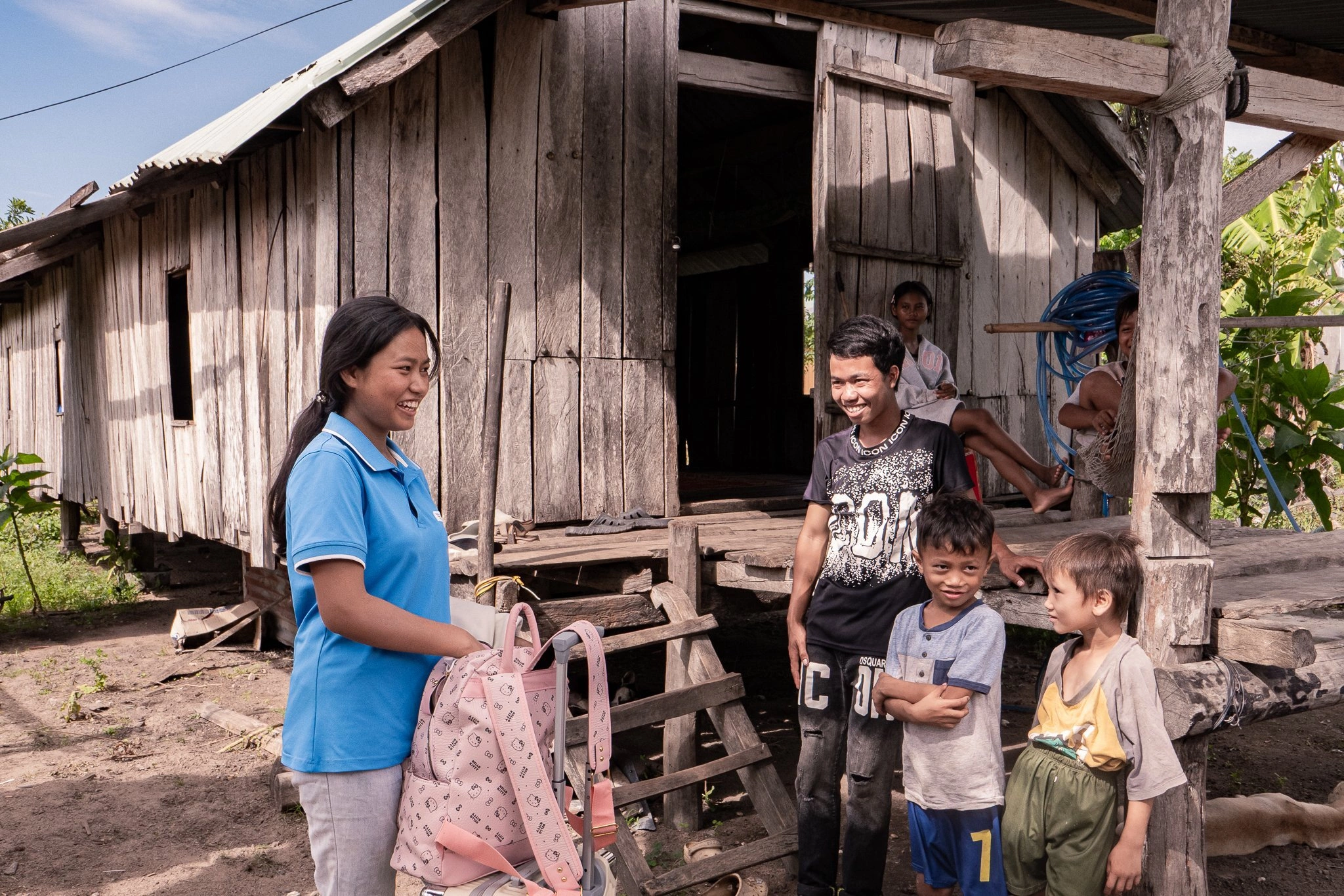
"H’Truong has agreed to come back," Quyen announced when they reentered the wooden house.
The girl went inside to pack her clothes and other belongings, ready to leave with the teachers. No one objected.
"The ferocity of the pandemic forced adult responsibilities onto children’s shoulders," Quyen reflects.
He does not want his students to trade their right to learn and build a better future for the love for their parents. For children in situations like H’Truong’s, education is the best path out of the poverty that surrounds them, he says.
To this day Quyen and Thanh still have no definitive answer to the question people debated five years earlier: which is better for orphans - school or home?
"The children’s future will be the answer," Quyen says.
If what began as a gamble by the founders is judged by how the students have developed, he believes they have won.
At 8 p.m. on a summer evening in August, the HOPE library is still lit.
Children are sprawled across the book-filled room - some reading, some studying, some sleeping, some playing.
It is the only air-conditioned room in the school, open day and night, drawing the students at all hours. They do not know it is a deliberate trick by the teachers to immerse them in the world of books.
"Brother Trong is back!" the children cry suddenly and rush over, crowding around as Thanh Trong enters the library in a shirt and trousers.
"So handsome!" they chirp.
Trong is now a medical student at Phan Chau Trinh University and a "role model" for the younger students at HOPE School.
Nearly two months had passed since they last saw their "big brother."
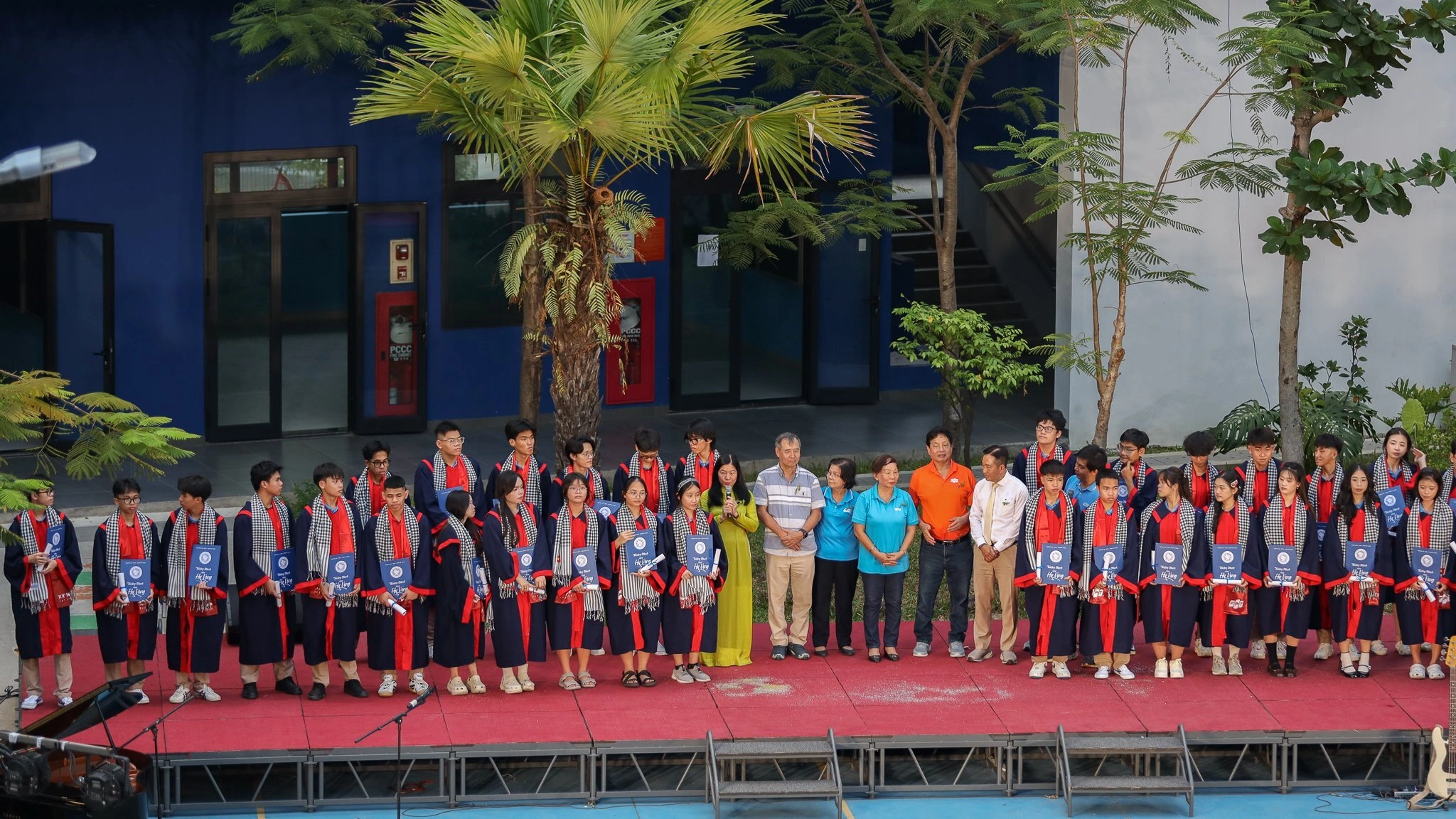
The previous meeting was at the graduation ceremony in June, when Trong returned for the farewell of 35 graduates who, like him, were stepping through the gates of higher education.
After five years, 18% of HOPE's 363 students have entered university or college.
Many, like Trong, have chosen medicine because of scholarships; others have opted for military academies, vocational training, or returned home to find different paths.
In the first days after leaving school and beginning university life, Trong felt a touch of fear.
He describes himself as feeling like "a pupa about to break out of its cocoon," fragile after years of being protected.
During his freshman year he often returned to HOPE school to hang out and play with the younger students. He wanted to help them nurture the same dream of university that he had.
"For me, Hope was the first station, the launch pad that let me reach the goal I wanted," he says.
He had decided to board a train, embarking on a journey that carried him through the dark period after his mother's death and toward his destiny.
Story by My Ha, Phung Tien, Thu Hang
Photos by Phung Tien, HOPE School
*All photos and stories used in this article have been published with the approval of the children and their families.

