 Get VnExpress first in Google Search
  See more of the news you trust. Make VnExpress a preferred source to prioritise our updates in your Google search results
 Five years after her father died of Covid-19, Ho Nguyen Minh Tam, 14, still regrets the things she never got to do for him.
The pandemic claimed more than 32,000 lives and left 4,400 children orphaned. Many have been learning to overcome the shock of sudden separation and gradually grow into better versions of themselves.
VnExpress recounts the journeys of children growing up without their mothers or fathers at HOPE School, a home that cares for and educates children orphaned by the pandemic. Though they share similar circumstances, each child has faced the pain and learned to move forward in their own way.
When Tam finished her first color painting, the person she most wanted to show it to was her father. When he was alive, he always encouraged her to paint with colors instead of just pencil. But she was lazy and never did as he asked.
"If only the me of the past was the me of today, how wonderful that would be," Tam says.
Her father died in 2021. By then, she had not completed a single color painting.
"I wish I could go back to those days when Dad was still by my side, supporting my dreams," Tam wrote in a letter to her late father.
Tam's letter to her late father:
"Dad! It’s been so long since we last saw each other. It’s been so long since I heard your voice calling my name at home – ‘Turtle!’ or ‘Where’s little Turtle?’ I miss the times you took the whole family out, the times you laughed and joked with me, even the times you scolded us and spanked us with your belt when we were naughty. I wish I could go back to those days when you were still here, cheering on my dreams.
When I was little, there was a day I sat singing by myself. You sneaked into the room and recorded me. I was so embarrassed that I made you delete the video from your phone. Another time, I told you I wanted to become a painter when I grew up. You suddenly asked me to paint a complete picture for you. Back then I only knew how to draw with pencil, so when you asked me to use colors too, I got lazy and never did it. Looking back now, I wish the me of the past was the me of today. I wish I could sing for you, even if I’m still not good. I wish I could draw a picture for you, even if my skills are still nothing special. I wish you could see how much I’ve grown. I want you to see that the innocent little girl you once knew has now started the final year of secondary school.
I don’t know if you can see from up there. I don’t know if you notice those moments when my face goes blank, when my eyes well up, or when my brows furrow as I walk down the street and see little kids clinging to their dads.
It sounds a bit mean, but honestly I’m jealous of them. They make me miss you terribly. Somehow they make me want to hug you, hold your hand, or, when I’m sad, be comforted and loved by you – and express all the affection I never got to say.
I’m so angry at Heaven. I don’t care if that thought is sinful – I just am. Because it took you away too early and too suddenly. I had no time to prepare, no time to open my mouth and say ‘I love you, Dad.’ Heaven took you and left me nothing but a wound that is hard to heal, and deep regret for the times I was naughty and didn’t listen. There were moments when I was truly down. I even wished it would take me to follow you. But then I remembered that Mom and my two siblings are still here, so I chose to keep walking through a life without the man I loved most.
It would be so happy to see you again, even if it was the last time, even if you only scolded me for staying up late playing games and getting addicted to my phone. I would still listen to every word and remember them until the end. I miss your voice so much – whether it was scolding or anything else. I miss it so much.
Dad! If there is a next life, I want to be your child again. Remember to scold me a lot if I’m naughty – I’ll be so happy. Then I’ll promise to be good and I won’t be mad.
I love you so much!"
At HOPE School, Tam began practicing color painting. She taught herself how to mix acrylic paints, creating different shades from four primary colors: blue, yellow, red and black.
"I don’t know the ratios. I just mix," Tam says.
Tam left her family in the Mekong Delta and joined HOPE School in Da Nang when she entered Grade 7.
School staff first visited her home in 2021. She did not want to leave home.
They returned the following year. This time, she said yes.
After her father died, her mother sold their house to pay debts and built a smaller one. Teaching alone was not enough to raise three children, so she also sold rice and drinks in her spare time.
"I changed my mind because we were so poor," Tam says.


In Grade 7 at HOPE, Tam barely spoke to anyone. She felt insecure about her "ugly face full of pimples." Teachers suggested she join the Art Club, and she soon became absorbed in brushes and paints.
Unlike friends who usually painted landscapes, Tam preferred painting people. She sketched faces that appeared in her mind, sometimes finding inspiration in books and songs. She also painted portraits of friends and gave them as gifts.
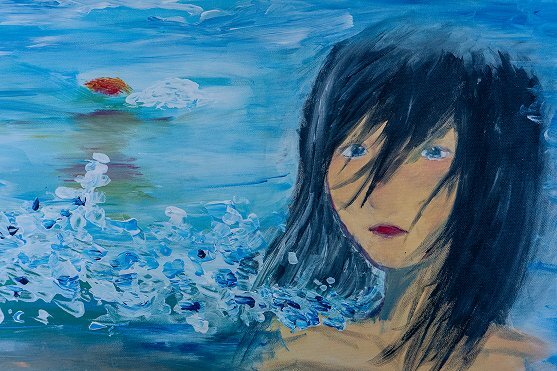

Last year, Vietnamese artist Truong Trung took the class to the beach to paint. Tam became frustrated when her strokes did not turn out as she wanted and burst into tears. Encouraged by her teachers, she finished the painting. That day, hers was the only work the artist did not correct.
Tam still feels her paintings are "not beautiful at all" because many do not match what she imagines. But she has begun nurturing the dream of becoming a painter – the dream her father once encouraged.
Since coming to HOPE, she feels her skills have improved. More people talk to her about art, while the club has begun receiving commissions for painted hats and gift paintings. Many works displayed around the school bear the signature "Minh Tam."
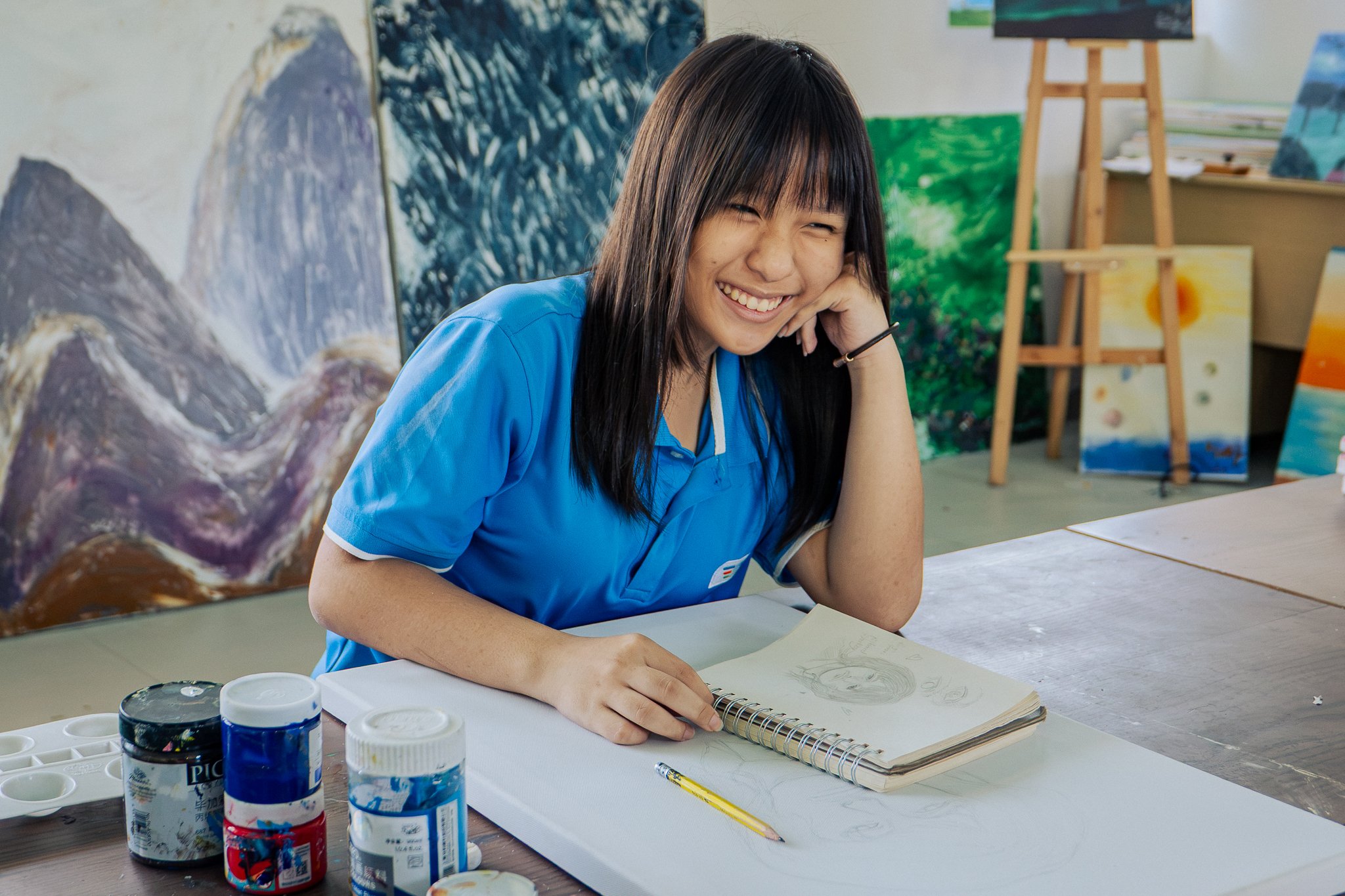
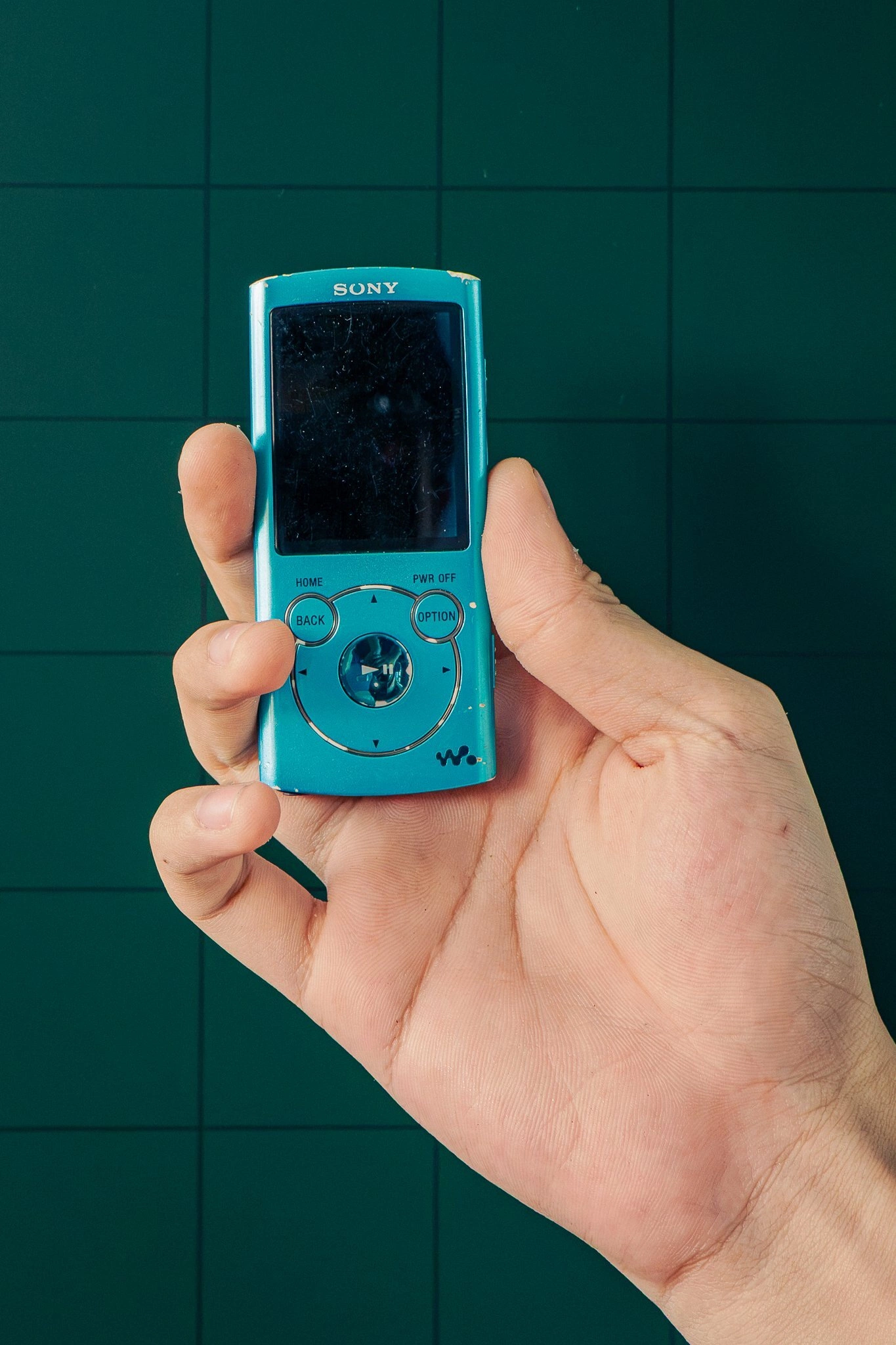
Tang Vong Ky Hao, 17, from Ho Chi Minh City, received a portable music player from his aunt for his birthday two years ago. Whenever he got upset, he would take it apart and put it back together. Lately, those moments have become less frequent.
"Back home, whenever something annoyed me, I'd smash things. Afterward, I'd dismantle them and sell the parts," Hao says.
Normally quiet and cheerful, he struggled to control his emotions when angry.
His parents divorced when he was six and his younger sister was three. When asked whom they wanted to live with, both clung to their mother. Neither wanted to stay with a father who "drank all the time, then came home and hit mom and us."
Their mother brought them from Long An to HCMC, where they rented a room of less than 15 square meters near Nhat Tao electronics market. She worked at a motorbike parking lot and sold drinks, while their grandfather, who lived nearby, became their main support.
Hao never imagined he could build anything. He mostly took apart his grandfather's electronics. There were no toys at home, only fans, phones and laptops his grandfather collected from second-hand markets.
"I was hooked. The moment the soldering iron made something burn, I was hooked for good," he recalls.
When Covid-19 hit, his mother volunteered on the front lines and became infected. She died at the end of August 2021 and returned home as an urn of ashes and an old phone.
"I didn't tell my sister right away. I took her home for the funeral, and that's when she found out," Hao says.
After their mother died, Hao stayed with his grandfather while his sister went to live with their aunt. Knowing the family was struggling, Hao planned to leave school after Grade 9 and work to help his grandfather support his sister's education.
A local Women's Union worker later told him about HOPE School in Da Nang. Hao told his grandfather about the school, where food and tuition were covered.
"He said, 'Do whatever you want.' He didn’t stop me," Hao recalls. "I thought if I could finish high school and maybe go to college, why not try? I had nothing to lose."
Hao planned to go first and see how it worked out before bringing his sister. But she refused: "If we go, we go together."
At the train station, their grandfather told them: "Just study. This might be the last chance you get to go to school properly."
Moving to Da Nang became a turning point for both siblings.
At HOPE School, they followed a packed schedule starting at 5:30 a.m., including exercise, gardening, classes and club activities.
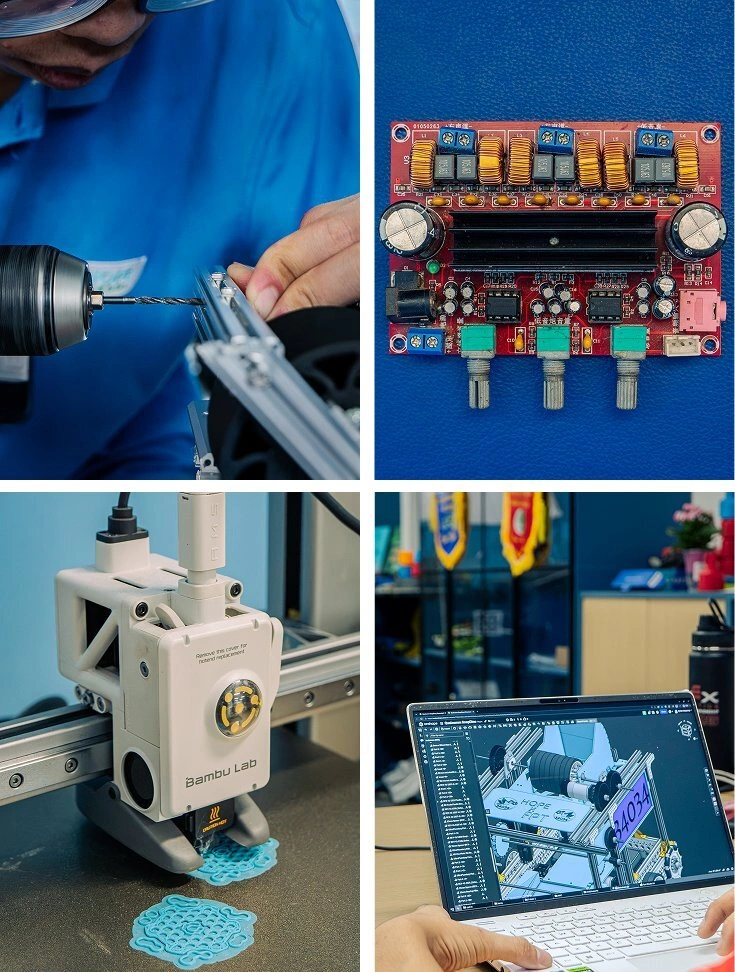
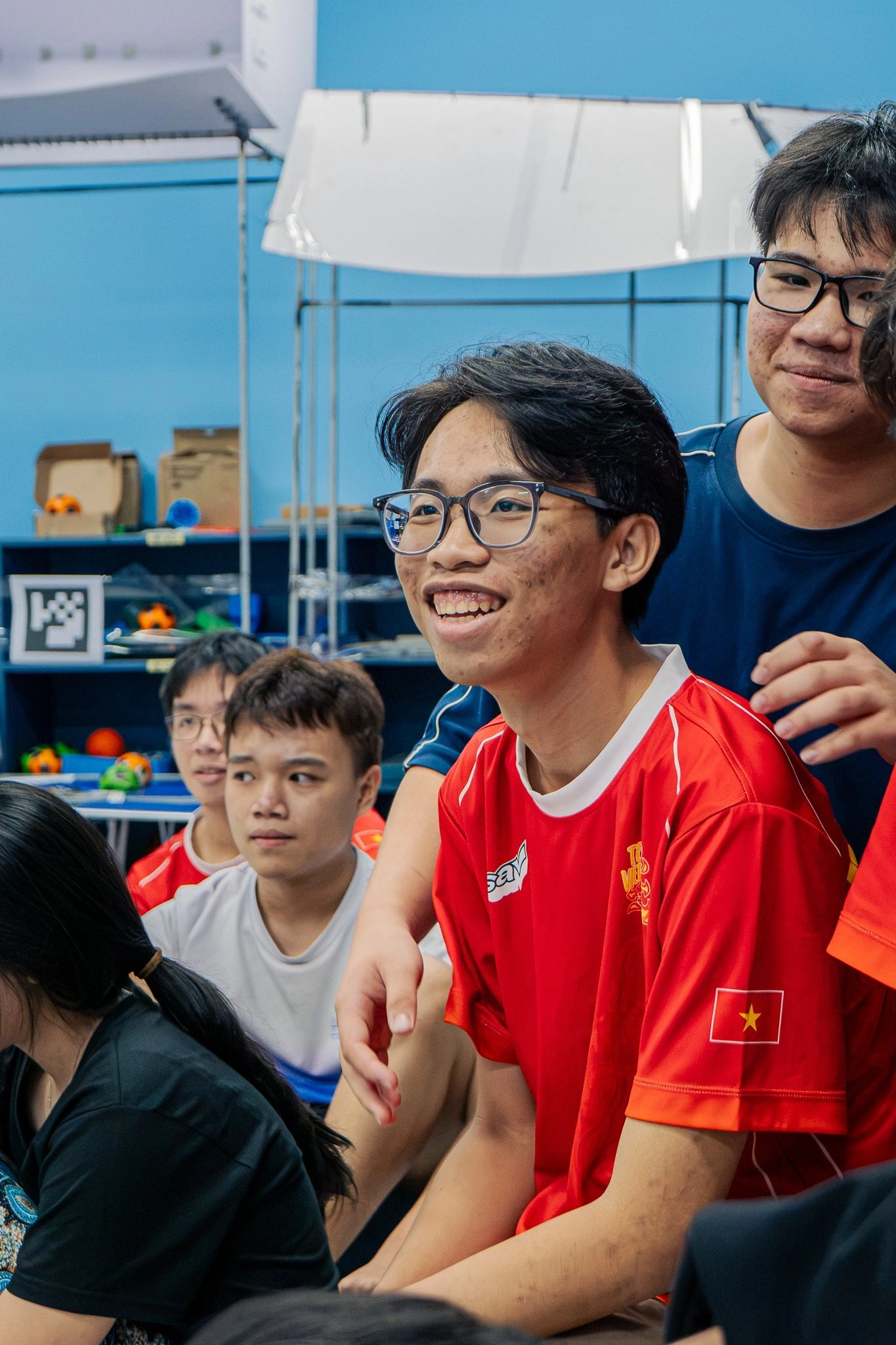
Hao initially joined the Robotics Club just to avoid gardening. The club was struggling with a robot problem before a national competition. Hao began experimenting with it and accidentally fixed the problem.
"They were so happy. They couldn't believe a complete beginner could do it. I didn't even know anything. I just got happy along with them," he says.
The team asked the club advisor to make him an official member two weeks before the competition. From then on, Hao has devoted much of his time to building robots.
"When I'm building, I focus completely and tune everything else out," Hao says.
The Robotics Club has won awards at numerous competitions. Hao and his teammates will soon represent Vietnam at a robotics contest in South Korea.
Building robots requires trial and error. The team debates, tests different approaches and works toward solutions. Hao says the experience has helped him manage his emotions and communicate better with his friends.
"Robotics taught me focus. It also changed the way I think," he says. "I’ve gotten less angry here. I also talked with the school counselor to learn how to handle my frustration."
He now buys electronic parts and works on them whenever he feels angry, giving his frustration somewhere to go.
He has also begun making plans for his future. He does not plan to attend university because "it costs too much time and money, and my family can’t afford it." Instead, he hopes to attend a vocational school specializing in mechanics, with affordable fees and dormitory accommodation, and seek a scholarship through the school’s connections.
"In the future, I want to come back to the school and guide younger students in robotics, to give them the same chances I was given," Hao says.
"Please put that away, I'm so scared," Le Van Quang, 10, from Hue, said in panic to Nguyen Ngoc Lan Phuong, a member of HOPE School’s medical staff, when he spotted an oxygen bag in the corner of the room.
The oxygen bag was Quang’s deepest fear, tied to the last time he saw his mother. She could not breathe. His father called a doctor, and a white van arrived at their home. His mother was carried out on a stretcher while his father walked beside her, squeezing the oxygen bag.
She never came home. Quang was five.


Quang entered HOPE School in first grade. He could not yet spell or do math, brush his teeth or manage personal hygiene. He had never attended kindergarten, so older students and teachers had to teach him basic skills.
"Back then he always hid behind someone’s back, peeking out at the world from behind. No matter who called him, he wouldn’t come. He just stayed quiet," Phuong recalls.
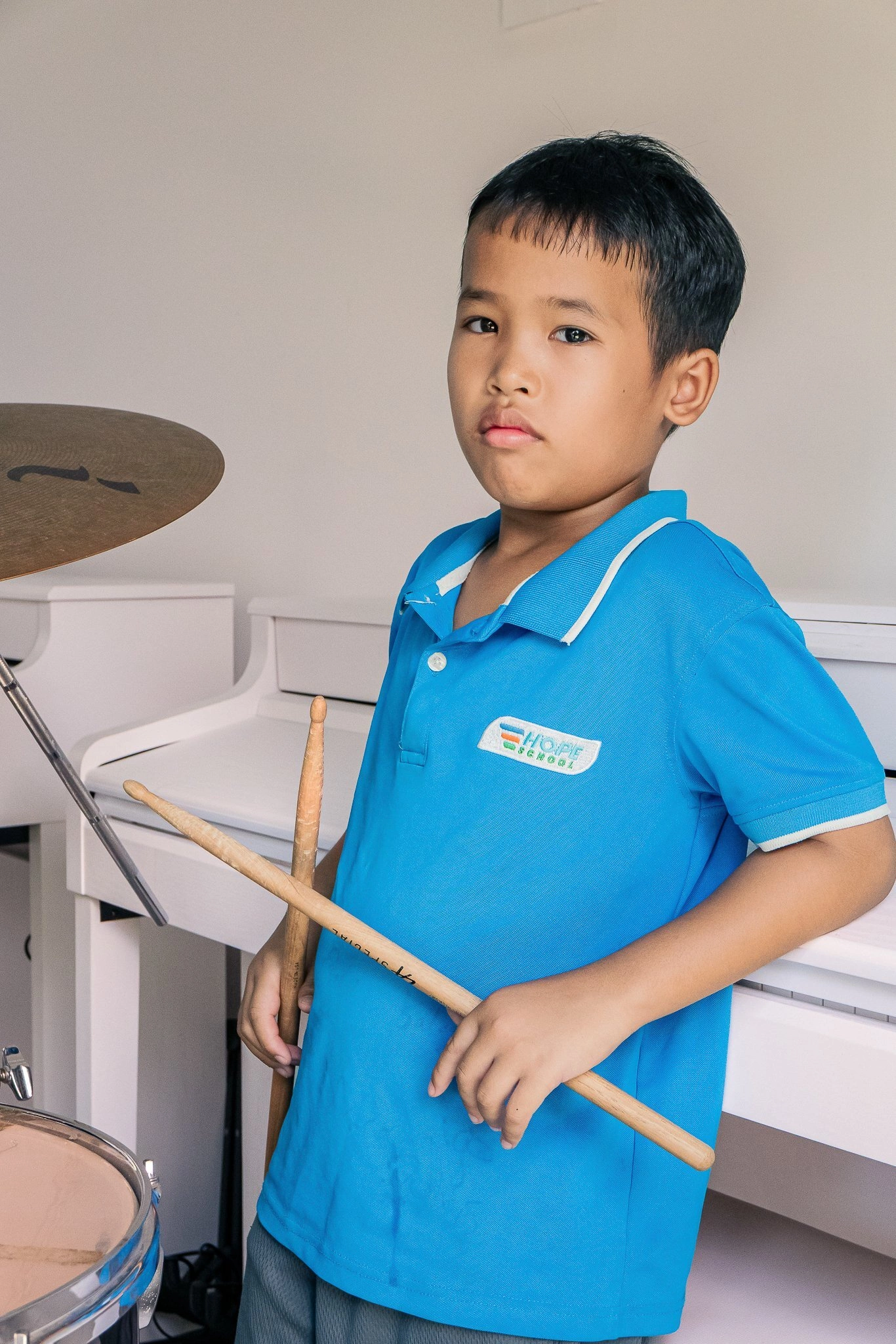
In 2022, Quang found his place when the Music Club bought a drum set. He had taken drum lessons in Hue and loved playing.
Every week, he has two lessons from 4 to 6 p.m. – his favorite time of the week.
With guidance from teachers and older students, he improved quickly. People began praising his talent, and he became more outgoing and talkative.
Last June, Quang gave his first official performance at a graduation ceremony for HOPE seniors heading to university. The shy boy who once hid behind adults stood on stage before hundreds of people.
"When I grow up, I want to perform drums," he says, beginning to nurture a dream for his future.
Chu Quang Khanh, 11, from Hanoi, calls himself "Choc" (Teasing) because he likes teasing friends and sometimes gets into fights. During his four years at HOPE School, he has been sent twice to the Silence Room, a place many students find intimidating.
The nearly empty room contains only a desk, a few books and the words: "Be quiet to understand yourself." Students who break the rules must stay there for a full day, reading and reflecting.
"Every time I'm in there it's boring. No one to play with. If I had known, I wouldn't have teased my friends," Khanh says.


When he entered the school in second grade, Khanh was already independent. He could cook fried rice with egg, fold his blanket neatly and wash clothes – tasks primary students at the school are usually not expected to handle.
"At first I was surprised he could do everything. Probably because he lacked his mother's care from a young age," says Phuong, the school's medical staff.
In 2021, his father died of Covid-19 when Khanh was six. He lived with his paternal grandmother and older brother near a flower market in Hanoi, while his mother stayed with her family and rarely came home. Both brothers could not read or write at the time.
When he first arrived at HOPE, Khanh was naughty and often punished. But whenever he was sick, he became obedient and listened carefully.
For a period, he had hepatitis B and easily developed fevers. The first time he had a high fever, he went to the medical room on his own and asked Phuong if he could sleep there because he was scared. From then on, it became the place he sought whenever he felt weak.
"I took care of him when he was in pain, comforted him, helped him stop swearing, and pushed him to study instead of just playing. Gradually his words became nicer," Phuong says. "I just treated him well, and he adjusted himself."
Once Khanh contracted measles and spent more than a week in hospital. He was frightened and repeatedly asked Phuong to let him return to school. When the doctor said he needed to be admitted, he teared up and asked: "I’m not going back to HOPE School?"
He then ran to the window and insisted she point out which direction HOPE School was.
"It’s very far from HOPE School here, Phuong," the boy said sadly.
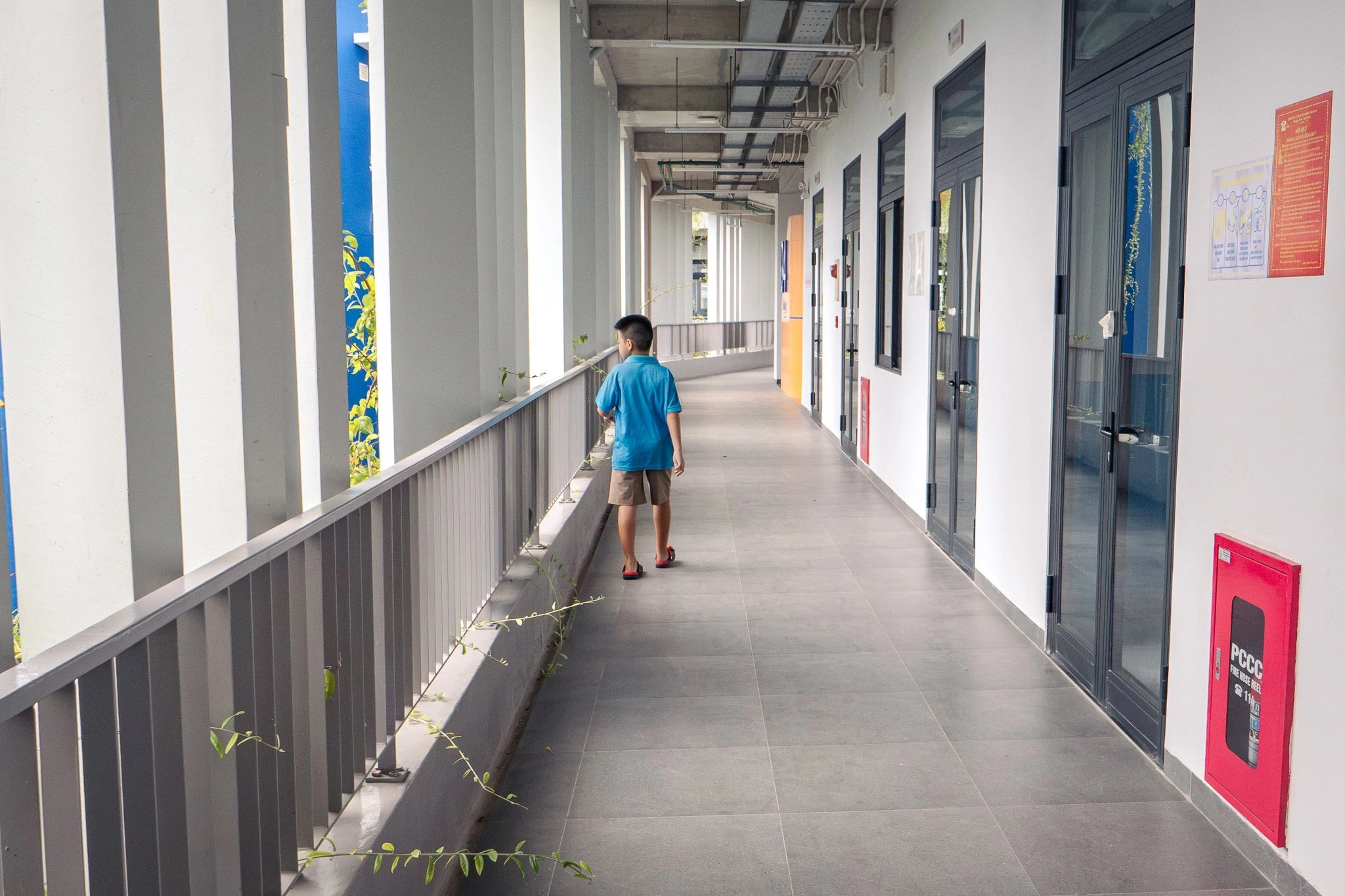
"I’m not going in there. If I go in, I’ll die," Khanh cried and tried to run away when the doctor asked him to enter the measles isolation room.
"Measles isolation is not the same as Covid," Phuong explained, knowing the child was still haunted by the pandemic. "I’m staying right here with you. I’m not going anywhere," she repeated until he calmed down.
In front of her, the naughty boy was simply a child carrying the fear of losing his parents.
Phuong describes Khanh as affectionate. Whenever he passes the medical room, he comes in to talk about friends, family or school. If no one else is around, he turns to her and says, "Kiss my cheek." When others are present, he becomes shy and only lets her smell his hair.
Once he wrote in the medical room notebook: "Thank you, teacher." Another time, he made a keychain himself and engraved: "Quang Khanh gives this to Ms. Phuong."
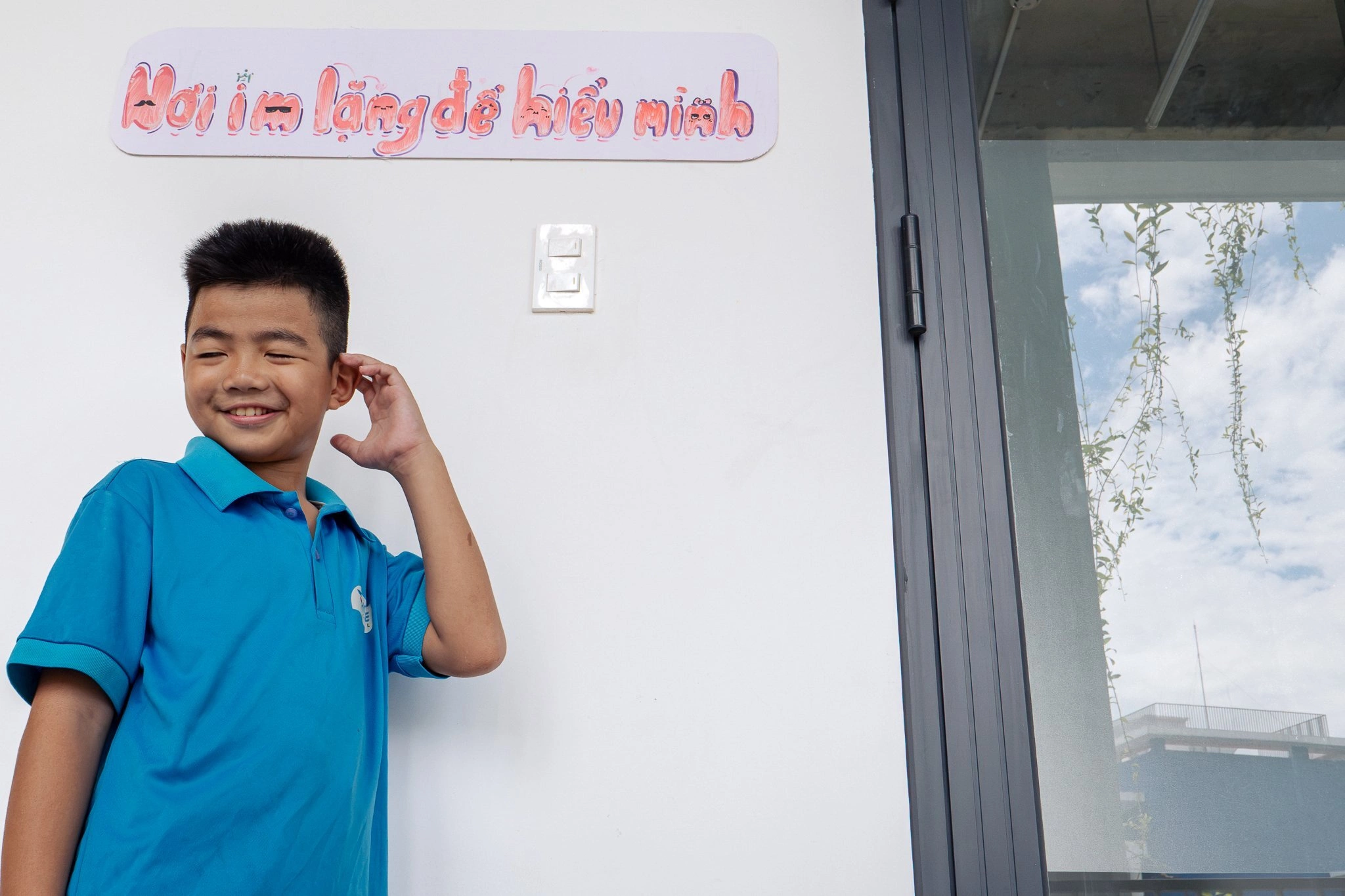
"Hug each other," 11-year-old Khanh – now a senior with experience of two stays in the Silence Room – said as he intervened in a quarrel between younger students.
He copied his teachers and told those who started the fight to read the school’s 10 promises. The younger students raised their hands and read along. The conflict was resolved.
After five years at the school, Khanh has gradually changed by observing his teachers. The boy who once frequently got into trouble has stopped fighting and rarely teases friends. He still struggles with swearing and rough language, but he is trying to change.
"I have family at home, but studying here is still better. It builds discipline. No stealing, no smoking, no fighting, no teasing friends," Khanh says.
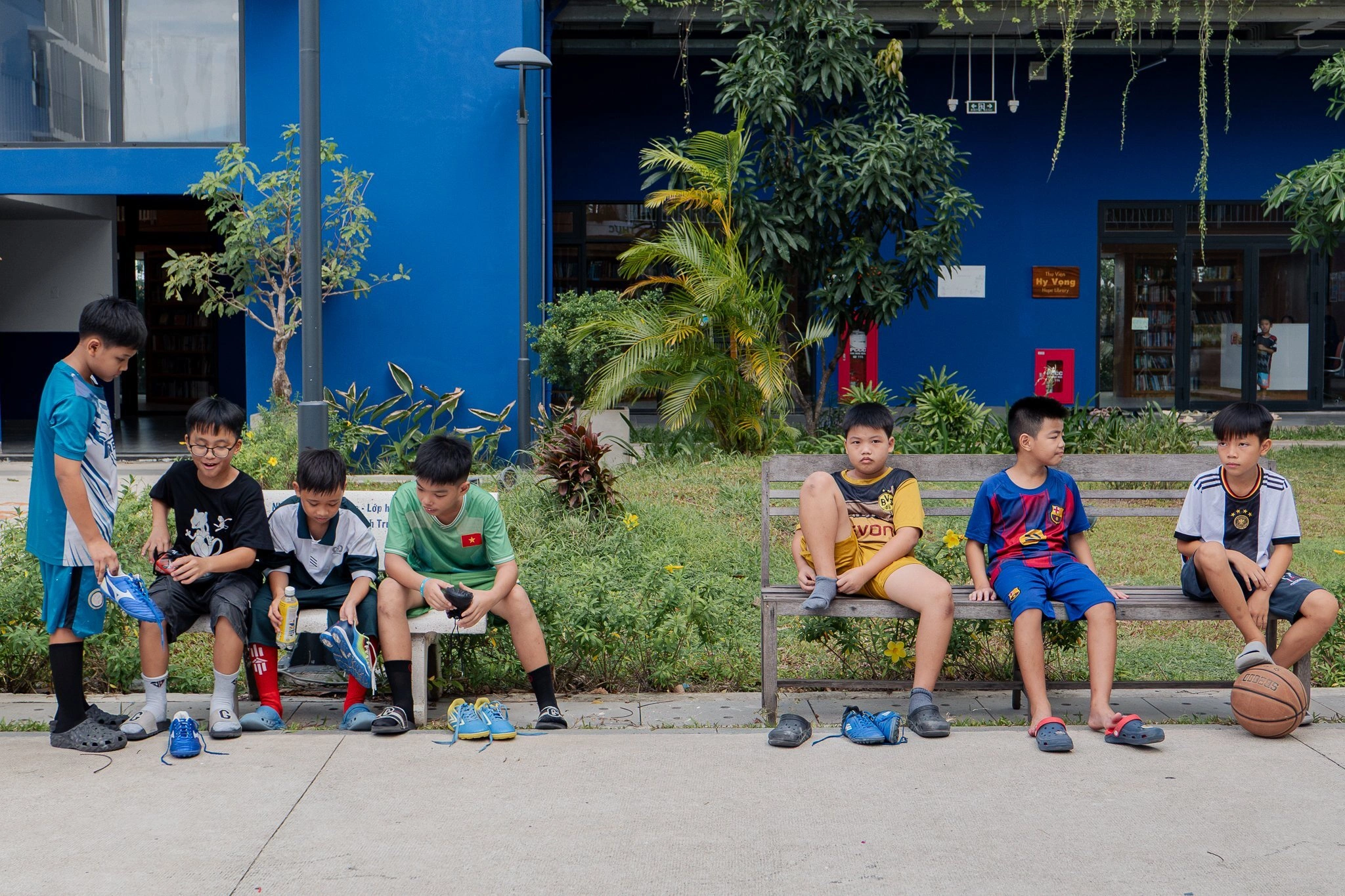
K Tuan Dat, 15, from Dong Nai, remembers his grandmother died on March 8, 2017. Four years later, on Nov. 21, 2021, at 3 p.m., his father died of Covid-19. Dat had expected the loss because his father had been ill for years, with multiple underlying conditions and a non-functioning kidney.
After his father died, life for Dat and his mother revolved around survival. In Grade 8, seeing how hard his mother worked to cover food and school fees, he took jobs after class, digging soil, weeding, carrying rice and planting cashew trees. During the summer, he worked as a construction helper or fertilized fields. He gave his earnings to his mother for living and school expenses.
But that was not the life he wanted. He knew he needed to focus on studying and see more of the world. Staying home while continuing school would only add to his mother's burden.
In summer 2025, the provincial Women's Union told his family he could study in Da Nang with free accommodation, meals and tuition. Dat decided to enroll at HOPE School before starting Grade 10.
"I knew I would miss home, but I had to go for a better environment. Staying home all the time, I wouldn't know what the outside world is like," Dat says.
He enrolled on Aug. 3, 2025. On the day he flew to Da Nang, he did not let his mother accompany him because he was afraid he would not be able to hold back his emotions.
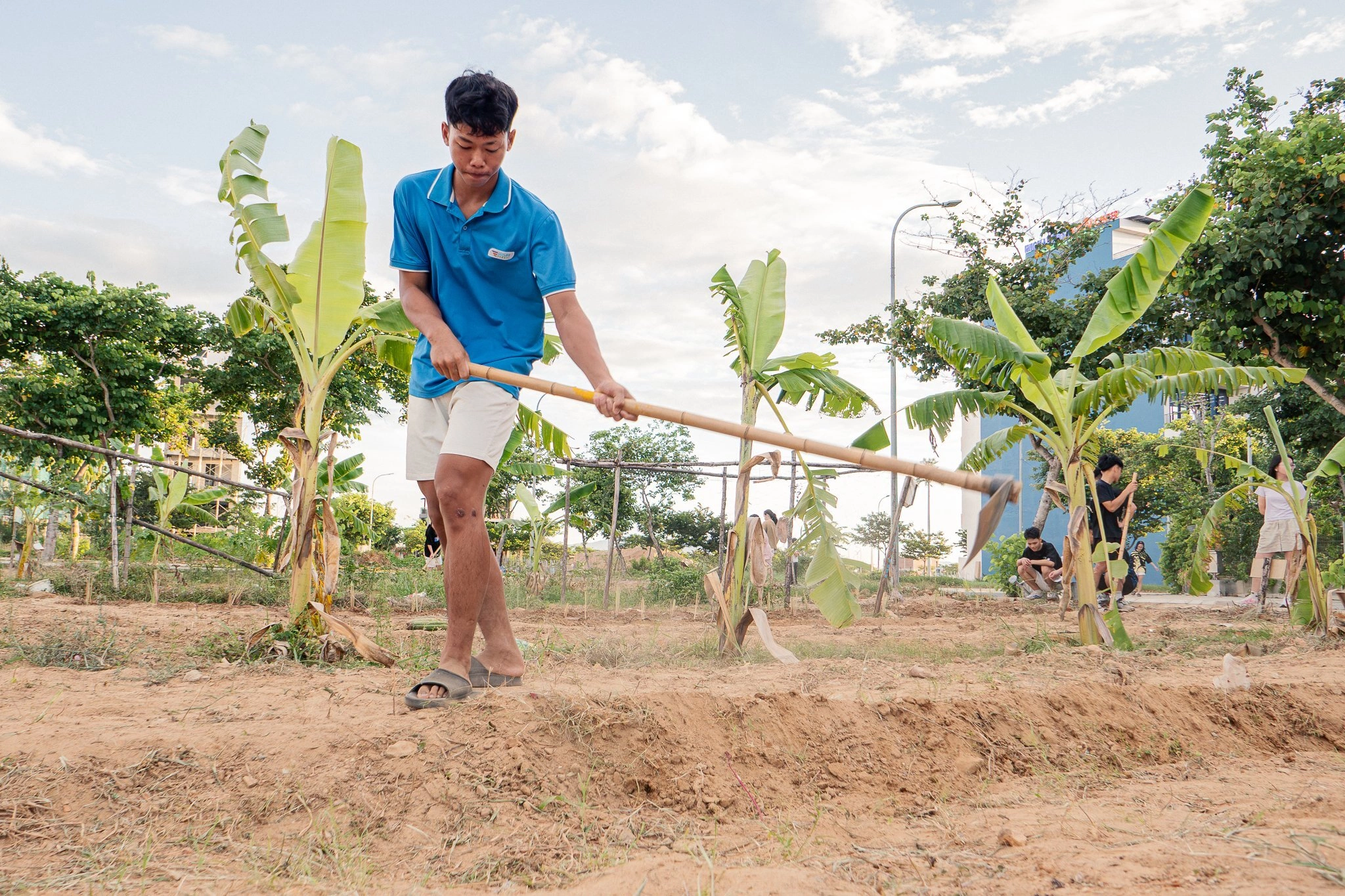
Outgoing by nature, Dat adapted within his first week. He focused on his studies and worked to overcome the English barrier of the new curriculum. He finds the teaching easy to understand and receives additional help from older students. He maintains good to excellent grades.
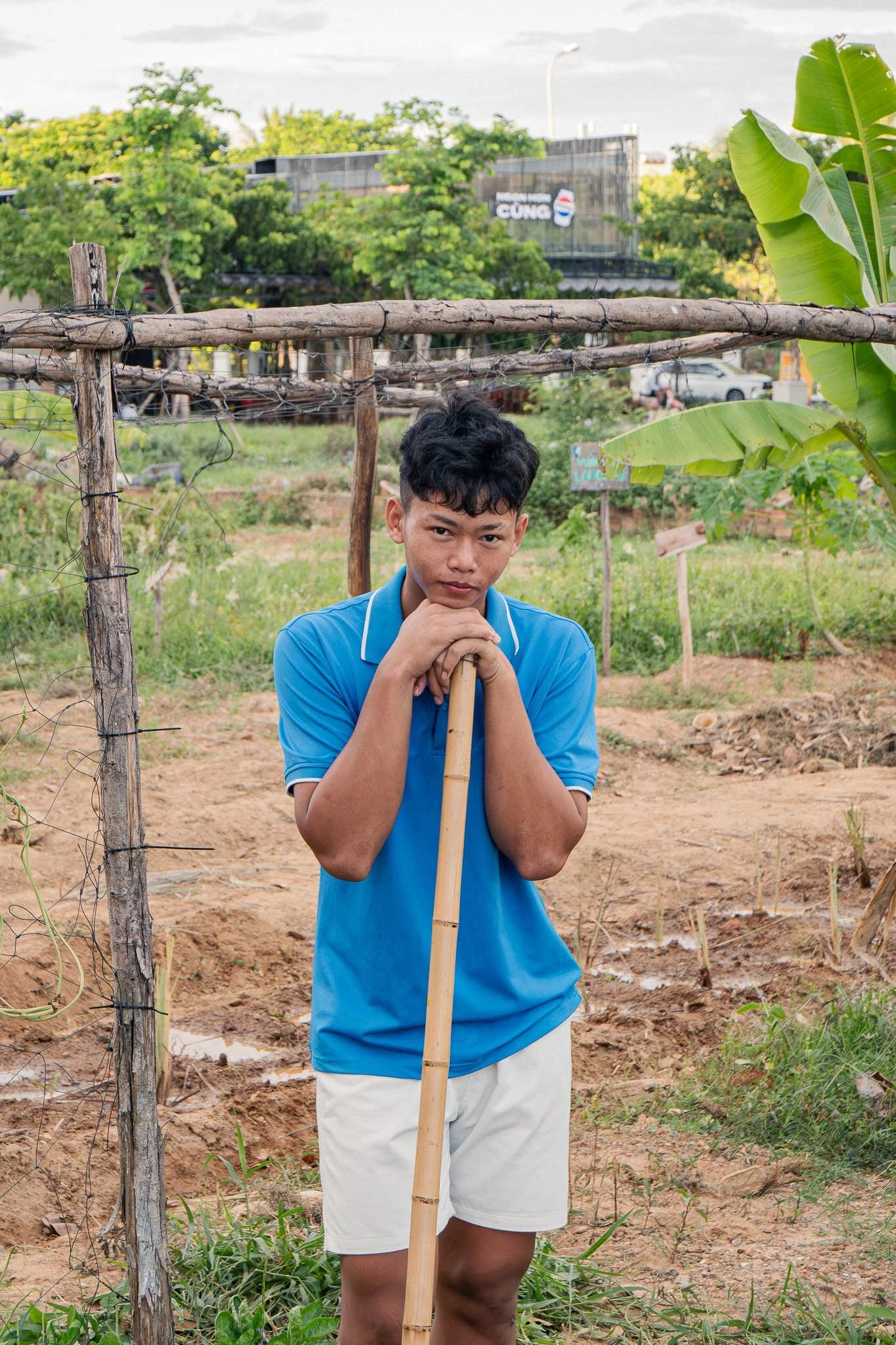
When studying becomes stressful, he goes to the school garden, which reminds him of home.
"Before, when I was tired from studying I just slept. It didn't feel very meaningful. Now whenever my head is too tired, I go to the garden and the tiredness goes away," Dat says.
Phan Thanh Phu, who runs the gardening club, noticed Dat's interest in nature from the beginning. While preparing seeds together, Dat could identify which ones had been treated against ants. The two soon began talking regularly about caring for plants.
The garden was once just sandy soil. Dat and his friends added fertilizer and worked the soil until it became suitable for planting. Last season, he grew eggplants, loofah, chili, bananas and corn, sharing the harvest with everyone at school.
"If I plant, there will definitely be results," he says confidently.
Gardening came naturally to Dat, who grew up in a farming family. His parents had taught him how to care for plants, grow rice and harvest crops. Many days after school, as soon as he puts down his backpack, he goes to the garden to dig and water without being reminded.


After a year away from home, Dat feels calmer. In the past, he was quick to argue when someone spoke badly about him. Now he channels those feelings into the soil, which also holds memories of his hometown.
If he had a garden of his own, he would plant cashew trees, like those his father once cared for.
On the train back to school this August, Dat still struggled to leave his mother. Carrying an old suitcase and the food box she had packed, he cried until his eyes were swollen as he said goodbye at the station. His friends quietly handed him a tissue.
"Being away from home means missing mom, but I have to go for a better future," Dat says. He hopes to become a railway engineer and earn enough to care for his mother.
"Your dad's gone," said the voice on the phone.
Pham Thanh Xuan, 17, from Gia Lai, hung up in shock, thinking her uncle was joking. Moments later, when she saw her mother and grandmother with swollen, red eyes, she knew it was true. The 2021 pandemic had taken her father.
Her father was an artist. When Xuan was in second grade and her youngest brother was born, he moved to Ho Chi Minh City to work as a manager at a food company so he could better support the family.
On his rare visits home, she noticed he had lost a lot of weight. His face was thinner, his skin darker and his hair grayer. She was worried but did not know what to do.
He died in Ho Chi Minh City. She never got to say goodbye.
At 13, she felt angry that he had left so suddenly, with so much still unsaid.
"I was too shocked to cry," she recalled the moment she learned of his death. "I just wandered outside."
The whole family knelt before his altar, everyone weeping except her. She could not yet accept that he would never come back.
Xuan's letter to her late father:
"Dear dad,
This is Thanh Xuan. I’ve thought a long time about what to write. When I was younger, I would have had so much to say. Now that I’m older, some things feel harder to begin.
I still freeze a little when I see a father driving his child to school, hear someone call "Dad," or pass a man whose back looks like yours. I used to think I would always remember you the way a child does - the rides, your voice, the times you scolded me for being naughty. What I remember most now is you saying, "I'm fine."
The day you came home from a work trip, you had lost 8 kg. Your face was hollow, your skin darker, your hair much grayer. While I pulled out your gray hairs, I told you, "You have to eat properly, dad, or you’ll get sick." You just smiled: "I’m fine. How could I get sick?" The next day I overheard you telling uncle about headaches and dizziness that medicine couldn’t fix. Yet you still said you had to keep working for our schooling, for food, for new clothes for Tet so we wouldn’t feel left behind.
You always taught me not to lie, but you hid so much hardship from us. I kept asking for things without realizing. Every time mom scolded me, you still stood up for me first, then gently guided me later. I took that for granted. Only after losing you did I understand how lucky I had been.
For a while I was angry, angry that you left too soon, angry that so much remained unsaid. I wished you had stayed longer so I could grow up a little more and tell you how much I loved you. But I can’t stay forever in a place where the person I love is no longer standing. Life keeps moving, whether I want it to or not. And I have to move with it.
Some days I feel so tired I just want to be that little girl again - no worries about tomorrow, no pressure to be good enough - because with you there, nothing felt quite so scary. If you were still here, though, I don’t think you’d want to see me keep my head down forever. You’d probably just look at me and say, "Keep going, kid." Such a simple sentence, yet I never knew how much I’d miss it.
I used to think being strong meant never crying, never showing weakness. Now I think strength is finding a reason to keep walking even on the hardest days. You’re one of those reasons. I can’t bring you back or say the things I never said. But I can live the rest of my life well. I want to study not just for good grades, but so I can support myself, ease mom’s worries, and be someone the family can lean on when they need me.
I want to buy mom the things she never dared buy for herself and take grandma places she’s never been to. I know that still feels far away. I’m still just a kid who has bad study days and sometimes feels like I’m not good at anything. But I don’t need to become someone extraordinary overnight. I only need to be a little better each day, kinder to mom, more responsible. One day I might look back and see I’ve come farther than I thought.
I won’t promise to be perfect. I only promise that when life feels heavy, I’ll remember I still have a family to love, things I want to do, and people waiting for me to grow up. I want the first thing people remember when they mention you to be everything you left behind, not the day you left. You can’t hold my hand anymore, but I believe I’m still walking the path you started. This time I’ll walk it myself - carrying your love, our family, and everything still unfinished.
If you can see me from somewhere, please don’t worry. I’m still growing, a little clumsily sometimes, but I’m trying. And dad, I’ll live well, and for a long time. I want the rest of my life to be the answer to all the love you gave me. I have new friends now, teachers who care, and a family that cheers me on whenever I’m tired. Dad, rest in peace... I’ll keep walking the rest of the way myself."
For four years afterward, Xuan barely cried. Financial worries pushed the grief aside. Without a place at HOPE School, she had planned to finish Grade 9 and start working.
When she arrived at HOPE, she hardly spoke to anyone. Even with her mother, she became more distant. She kept checking her father’s Zalo account, but it was silent.
"I suddenly realized he couldn’t call me anymore," she says. That was when she finally accepted that he was gone. Four years after his death, she cried for the first time.


In Grade 10, another blow came: her mother, who had worked from 3 or 4 a.m. until late at night to support her three children, suffered a stroke.
Her older sister returned home to care for their mother. Xuan felt helpless as she listened to her sister describe their mother being wheeled away, eyes closed and body limp.
In those moments, she thought of her father. He would have looked at her and simply said, "Keep going, kid."
She filled her days with clubs such as soap-making, singing and drawing. The activities and opportunities to learn kept her occupied, while teachers and friends became people she could rely on.
School became a second home.
"Sometimes I just needed someone to listen and give me a hug," she said.


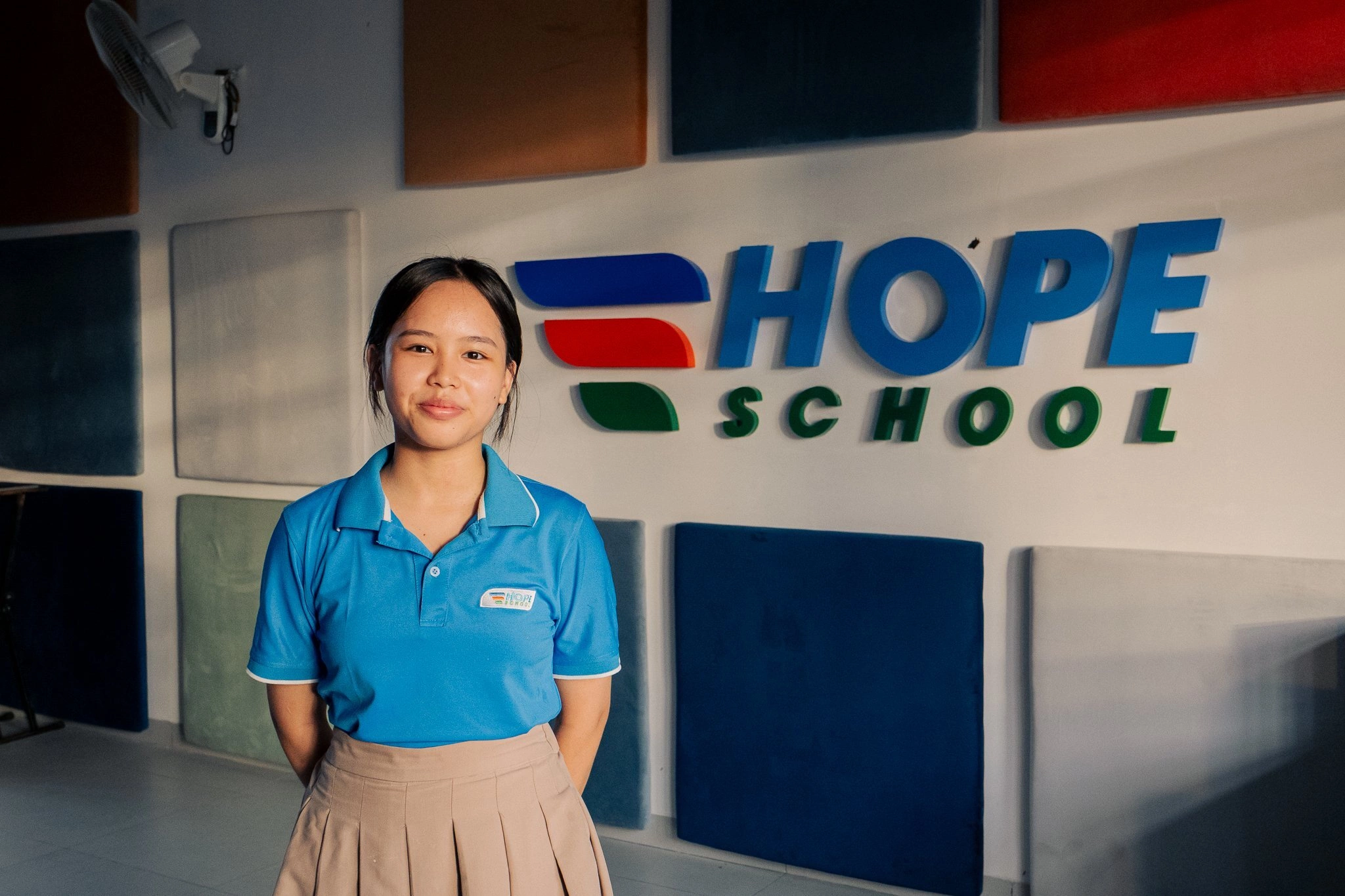
Xuan began dreaming of becoming a primary-school teacher. She enjoyed looking after younger children at school, which also helped her become more patient when she returned home to care for her mother.
During the summer, she helped her mother exercise, bathed her and supported her as she learned to walk again. On days when her mother managed a few steps without a cane, hope returned.
Xuan promised herself that one day she would buy her mother the things she had never allowed herself and take her grandmother to places she had never seen.
"I’ll live well, and for a long time," she wrote in her letter to her father. "I want the rest of my life to be the answer to all the love you gave me."
Story by Phung Tien, My Ha
*All photos and stories used in this article have been published with the approval of the children and their families.

